Maneli Pets is a Johannesburg-based manufacturer operating within South Africa’s growing pet treat industry. The company supplies private-label products as well as its own branded ranges, serving both domestic and export markets.
This article explains the broader South African pet treat context and then examines how Maneli Pets positions its three distinct brands across premium, mid-tier, and value market segments.
Overview of South Africa’s Pet Treat Industry
South Africa’s pet treat sector has expanded steadily in response to rising demand for natural snacks, high-protein formulations, and products suitable for export markets. Pet owners increasingly seek treats with short ingredient lists, identifiable protein sources, and minimal processing.
Both local and international buyers influence this demand, particularly where South African manufacturers supply novel proteins that are less common in overseas markets.
Market Context and Regulatory Environment
The South African pet treat market operates under the Fertilizers, Farm Feeds, Agricultural Remedies and Stock Remedies Act (Act 36 of 1947). While pet treats are not classified as complete feeds, they must comply with ingredient disclosure and labelling requirements when nutritional or functional claims are made.
Brands that supply export markets must also comply with additional hygiene, traceability, and labelling standards. These requirements influence formulation choices, packaging formats, and quality control processes.
Key Industry Trends Shaping Product Development
Several trends define the current pet treat landscape in South Africa. These include increased use of locally sourced protein inputs, growing demand for freeze-dried and air-dried treats, and expansion of functional chewing products such as tendons and pizzles.
There is also strong growth in private-label manufacturing, alongside consumer preference for preservative-free or minimally processed treats. These conditions support multiple price tiers within a single manufacturing operation.
Maneli Pets and Its Brand Structure
Maneli Pets operates across three distinct branded ranges, each designed to serve a different segment of the pet treat market. This tiered structure allows the company to address varying consumer needs without diluting product positioning.
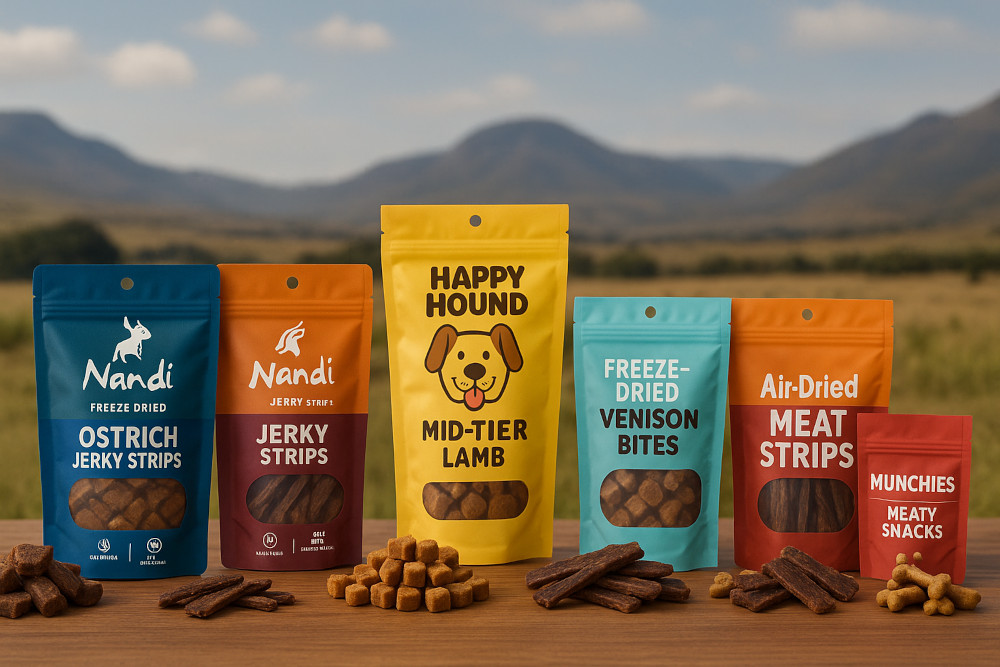
The brands are Nandi, Happy Hound, and Munchies, each defined by ingredient selection, processing methods, pricing, and distribution focus.
Nandi: Premium Pet Treat Range
Nandi is positioned as a premium pet treat brand with an emphasis on natural ingredients and novel protein sources. Products are developed for pet owners who prioritise high protein density, minimal processing, and ingredient transparency.
The brand operates in the upper tier of the market and is visible in both South African and selected international retail environments.
Product Characteristics
Nandi products typically consist of high-protein freeze-dried meats and limited-ingredient formulations. Proteins are sourced from wild or free-range animals, with no grain-based fillers or artificial preservatives.
Product Formats
The Nandi range includes freeze-dried meat pieces made from single proteins such as ostrich, venison, beef, or lamb. Freeze-drying removes moisture while maintaining nutrient integrity and shelf stability.
Freeze-dried sprinkles are produced as finely chopped or powdered meats for use as meal toppers or training aids. Jerky strips are slow-cooked meat products designed for dogs that prefer chewy textures.
Functional chew products include Nguni beef tendons, pizzles, and ostrich tendons, which support natural chewing behaviour and mechanical dental abrasion.
Intended Use and Target Market
Nandi is suited to pet owners seeking premium treats for training, enrichment, or pets with dietary sensitivities. The use of novel proteins may assist animals that do not tolerate common protein sources.
Happy Hound: Mid-Tier Everyday Treats
Happy Hound represents the mid-tier brand within the Maneli Pets portfolio. It is designed for households that want consistent quality at accessible price points without premium positioning.
The brand emphasises local sourcing and broad retail availability across South Africa.
Product Characteristics
Happy Hound treats generally consist of meat-based snack pieces made from locally sourced proteins. Products are intended for regular use rather than specialised feeding scenarios.
Product Formats
Common formats include soft treats or small bites used for training and frequent rewards. Dried or air-dried snack pieces offer longer shelf life and straightforward ingredient profiles.
Packaging is typically sized for regular household use and repeat purchasing.
Intended Use and Target Market
Happy Hound is suitable for pet owners who prioritise reliability and affordability. It aligns well with retail environments where price sensitivity and volume sales are important.
Munchies: Value-Oriented Treat Range
Munchies is the value-focused brand within the Maneli Pets group. It is designed for wide retail distribution and cost-conscious consumers.
The brand balances affordability with local manufacturing and protein-led formulations.
Product Characteristics
Munchies products commonly include freeze-dried bites, air-dried meat snacks, and mixed-ingredient formulations. Vegetable glycerine or molasses may be used to enhance texture or palatability.
Permitted preservatives or antioxidants may be included to extend shelf life where required.
Product Formats
Freeze-dried bites are produced in smaller, cost-accessible portions using proteins such as beef, lamb, ostrich, or venison. Air-dried treats provide economical options for frequent feeding.
Mixed-ingredient treats incorporate additional flavour components to improve acceptance, particularly in mass retail environments.
Intended Use and Target Market
Munchies serves price-sensitive households, multi-pet homes, and buyers seeking locally manufactured treats at accessible prices. The brand is positioned for supermarkets, large retailers, and bulk-buy channels.
Role of Novel Proteins in South African Pet Treats
A defining feature of South Africa’s pet treat industry is access to novel and regionally available protein sources. The country’s agricultural and game-farming sectors support production of proteins that are uncommon in many international markets.
These proteins are often used in treats designed for pets with sensitivities to standard ingredients.
Common examples include ostrich, which is lean and high in protein, venison with high nutrient density and lower allergen risk, crocodile with a distinct amino acid profile, and beef or lamb suitable for jerky and dried formats. Fish is also used in selected product lines.
Regulatory Considerations for Pet Treat Manufacturers
Pet treats fall under Act 36 of 1947 when nutritional claims or guaranteed analyses are included. Compliance typically involves accurate ingredient declarations, batch identification for traceability, and use of approved preservatives or antioxidants.
Premium and export-oriented products often include expanded nutritional labelling to meet international requirements, particularly for freeze-dried treat categories.
Choosing Between Premium, Mid-Tier, and Value Treats
Pet owners select treat categories based on price sensitivity, feeding frequency, and dietary considerations. Premium treats such as those in the Nandi range are often chosen for pets with sensitivities or for limited, high-value use.
Mid-tier options like Happy Hound provide balance for daily training and rewards, while value ranges such as Munchies support frequent treating in larger or multi-pet households.
This tiered structure helps guide informed purchasing decisions across different household needs.
Conclusion
South Africa’s pet treat industry continues to grow through strong local manufacturing capability, access to novel protein sources, and export-ready production standards. The three brands associated with Maneli Pets cover the full market spectrum, from premium freeze-dried products to everyday value treats.
Together, Nandi, Happy Hound, and Munchies reflect increasing demand for protein-focused, locally produced, and clearly positioned pet treat options within South Africa and beyond.