
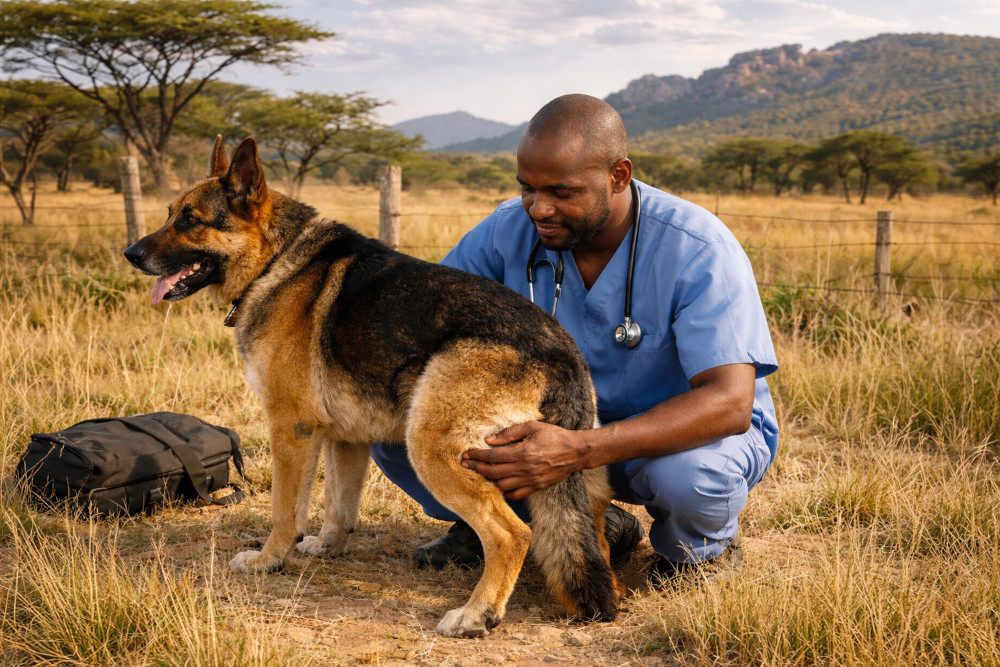
Hip dysplasia, cruciate ligament injuries, and arthritis are among the most common orthopaedic problems in South African dogs. These conditions affect mobility, quality of life, and long-term health.
This guide explains symptoms, causes, treatment options, climate considerations, and practical management plans for South African owners.
Why Joint Problems Are Common in South African Dogs
South Africa has a large population of medium and large dog breeds. These breeds are more prone to hip dysplasia and cruciate ligament injuries because of their size and active lifestyles. Running on uneven ground, farm terrain, and rough surfaces increases strain on joints.
Climate also plays a role. Cold Highveld winters worsen arthritis stiffness, while hot summers reduce activity levels and cause weight gain. Many South African dogs live on large plots or smallholdings where fast turns and uneven surfaces increase injury risk.
Understanding Hip Dysplasia
Hip dysplasia occurs when the hip joint forms incorrectly. The ball and socket do not fit properly, causing instability. Over time, this leads to inflammation, pain, and arthritis.
Why it happens
- Genetic predisposition
- Rapid growth in large breeds
- Excessive weight in puppies
- Over-exercising during growth
- Poor-quality diets affecting bone development
High-risk breeds in South Africa
- German shepherds
- Labradors
- Golden retrievers
- Rottweilers
- Boerboels
- Pit bulls and large mixed breeds
Hip dysplasia can appear as early as a few months old or later in adulthood.
Symptoms of Hip Dysplasia
Dogs show different signs depending on severity.
Common symptoms
- Bunny-hopping while running
- Difficulty rising
- Stiffness after rest
- Weakness in back legs
- Loss of muscle around the hips
- Reluctance to climb stairs or jump
- Pain when touched near the hips
Symptoms may worsen in cold weather or after heavy activity.
Cruciate Ligament Injuries (CCL Tears)
Cruciate injuries are extremely common in South African dogs and often occur suddenly. The cranial cruciate ligament stabilises the knee. When it tears, the joint becomes unstable and painful.
Common causes
- Sudden turns during running
- Jumping awkwardly
- Slippery floors
- Obesity
- Repeated strain over time
High-risk breeds
- Labradors
- Rottweilers
- Pit bulls
- German shepherds
- Border collies
Cruciate injuries often affect one knee first, then the other knee later.
Symptoms of a Cruciate Ligament Tear
Signs to watch for
- Sudden limping
- Toe-touching or holding the leg up
- Knee swelling
- Difficulty standing up
- Reluctance to walk or run
- Sitting with the injured leg extended outward
Dogs may improve after rest but become lame again after activity.
Understanding Arthritis in South African Dogs
Arthritis is the long-term inflammation of joints. It is common in older dogs but also develops earlier in dogs with hip dysplasia, cruciate injuries, or obesity.
Factors that worsen arthritis
- Cold Highveld winters
- Hard, slippery floors
- Excess body weight
- Previous injuries
- Genetic predisposition
Arthritis progresses slowly, so early management improves long-term comfort.
Symptoms of Arthritis
Common signs
- Stiffness after rest
- Slow to get up
- Limping after walks
- Difficulty climbing or jumping
- Irritability or change in behaviour
- Muscle loss in affected limbs
Dogs may show more discomfort in the mornings and on cold days.
Diagnosing Hip, Knee, and Joint Problems
Vets use a combination of physical examination and imaging to diagnose joint conditions.
Diagnostic steps
- Palpation of the hips and knees
- Gait and movement assessment
- X-rays to identify joint changes
- Drawer test for cruciate ligament tears
- Advanced imaging (CT/MRI) in complex cases
Early diagnosis helps slow progression and improves outcomes.
Treatment Options for Hip Dysplasia
Treatment depends on age, severity, and budget. South African clinics offer several medical and surgical options.
Non-surgical treatments
- Anti-inflammatory medication
- Joint supplements
- Weight control
- Controlled, low-impact exercise
- Physiotherapy and hydrotherapy
- Heat therapy in winter
- Supportive bedding
Surgical treatments
- Femoral head ostectomy (FHO)
- Total hip replacement (THR)
- Juvenile pubic symphysiodesis (JPS) for young dogs
Not all dogs need surgery, but early intervention leads to better outcomes.
Treatment Options for Cruciate Ligament Injuries
Cruciate injuries usually require surgical repair for long-term success.
Common surgeries in South Africa
- TPLO (tibial plateau levelling osteotomy)
- TTA (tibial tuberosity advancement)
- Lateral suture technique (for smaller dogs)
Non-surgical management
- Rest and restricted movement
- Anti-inflammatory medication
- Weight reduction
- Muscle-building exercises after recovery
Large dogs recover best with surgical intervention.
Managing Arthritis Long-Term
Arthritis cannot be cured, but symptoms can be controlled.
Veterinary treatments
- NSAIDs (anti-inflammatories)
- Disease-modifying arthritis injections
- Pain medication where required
- Laser therapy
Home management
- Soft bedding
- Ramps for stairs or cars
- Non-slip flooring
- Moderate, consistent exercise
- Diet to maintain healthy weight
Supplements often recommended
- Glucosamine
- Chondroitin
- Omega-3 oils
- Green-lipped mussel extract
These support cartilage health but should be used alongside vet care.
Climate, Loadshedding, and Joint Pain
South African conditions affect joint comfort.
Cold winters (Gauteng, Free State, high-altitude areas)
- Increase stiffness
- Slow down warm-up movements
- Require indoor sleeping arrangements
Hot summers
- Reduce exercise, contributing to weight gain
- Increase dehydration, worsening inflammation
Loadshedding challenges
- Cold houses without heating increase pain
- Slippery floors become risky during power outages
- Indoor inactivity worsens stiffness
Owners should adjust exercise and home conditions during extreme weather or outages.
Safe Exercise for Dogs with Joint Problems
Low-impact movement strengthens muscles and reduces joint strain.
Recommended activities
- Leash walking
- Swimming or hydrotherapy
- Short hill walks
- Controlled treadmill sessions
Avoid
- Jumping
- Fast turns
- Fetch on slippery floors
- Long runs
- Rough play with larger dogs
Consistency is more important than intensity.
When to Seek Veterinary Help
Owners should visit a vet if their dog shows:
- Sudden lameness
- Weakness in back legs
- No improvement after resting
- Difficulty standing
- Crying when moving
- Swelling around joints
- Rapid deterioration
Sudden, severe lameness may indicate a cruciate ligament tear or hip luxation, both requiring urgent care.
Conclusion
Hip dysplasia, cruciate injuries, and arthritis are common in South African dogs, especially in medium and large breeds. Early detection, weight management, and appropriate exercise help reduce long-term pain.
Vets can offer medical and surgical solutions depending on severity and budget.