
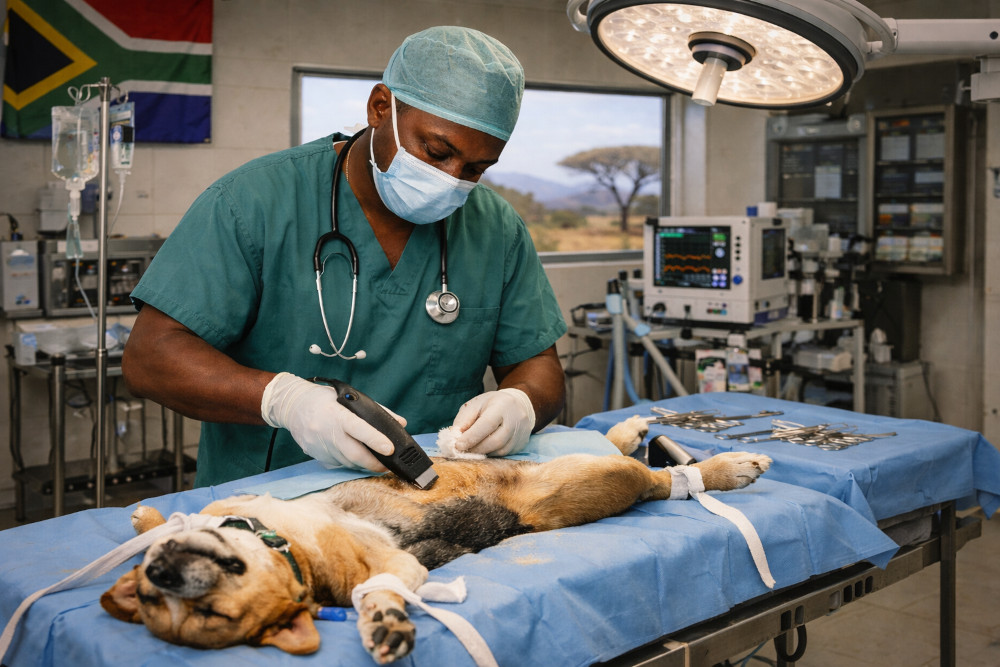
Dog sterilisation is one of the most common veterinary procedures in South Africa.
Owners search for information on cost, timing, benefits, risks, and what actually happens during the operation. This guide explains the complete sterilisation process, South African pricing, recovery expectations, myths, and how sterilisation affects long-term health and behaviour.
What Sterilisation Means in South Africa
Sterilisation prevents dogs from reproducing.
For male dogs, the procedure is called neutering. For female dogs, it is known as spaying. These are routine surgeries performed daily in South African veterinary clinics, SPCAs, and outreach programs.
Sterilisation helps reduce unwanted litters, roaming behaviour, and certain medical conditions. Many municipalities encourage sterilisation to control stray populations. Shelters also sterilise dogs before adoption.
Why South African Owners Consider Sterilisation
South Africans often sterilise dogs to avoid accidental pregnancies, reduce behavioural issues, or follow shelter requirements. Some insurers offer better premiums for sterilised pets due to lower long-term health risks.
Unsterilised dogs may roam, fight, or develop hormone-related medical problems. In rural and township areas, sterilisation also helps reduce roaming packs and unwanted puppies.
Costs of Sterilisation in South Africa
Sterilisation costs vary depending on the province, dog size, and vet clinic. Urban clinics charge more than rural practices, and large-breed dogs cost more due to anaesthetic needs.
Typical spay (female) prices
- Small dogs: R1,200–R2,000
- Medium dogs: R2,000–R3,000
- Large dogs: R3,000–R5,000+
Typical neuter (male) prices
- Small dogs: R800–R1,600
- Medium dogs: R1,500–R2,500
- Large dogs: R2,000–R3,500
Low-cost options
SPCA clinics, animal welfare groups, and sterilisation campaigns provide subsidised rates. These programs are common in Gauteng, Western Cape, KZN, and Eastern Cape.
Prices vary between branches but are usually significantly lower than private clinics.
When to Sterilise a Dog
Most South African vets recommend sterilising dogs at 6 months, but timing depends on breed and individual health.
Small breeds
- Safe from 5–6 months
- Early sterilisation reduces risk of marking and roaming
Medium breeds
- Recommended around 6 months
- Balances growth and health protection
Large and giant breeds
- Some vets advise waiting until 12–18 months
- Helps allow full bone and joint development
- Discuss timing with your vet to reduce hip or cruciate risks
Females and first heat
Sterilising before the first heat dramatically reduces mammary cancer risk. However, timing must consider breed size and bone development.
Benefits of Sterilising Dogs
Sterilisation provides several health and behavioural benefits for both male and female dogs.
Health benefits
- Reduced risk of mammary cancer (especially when spayed early)
- Prevention of uterine infections (pyometra)
- Reduced risk of testicular cancer
- Lower risk of prostate problems
- Prevention of ovarian and uterine disease
Behavioural benefits
- Reduced roaming in males
- Less aggressive competition
- Lower marking and mounting behaviour
- Females stop going into heat, reducing unwanted attention
Community and welfare benefits
- Fewer unwanted puppies
- Lower stray numbers
- Reduced fighting among roaming dogs
These benefits are consistent across South African regions and dog populations.
Risks of Sterilisation
Sterilisation is safe and routine, but all surgeries carry some risks.
Possible risks
- Anaesthetic complications (rare with modern drugs)
- Weight gain if diet is not adjusted
- Slight increase in urinary incontinence in sterilised females
- Higher risk of certain joint issues if sterilised too young (especially large breeds)
Discuss breed-specific risks with your vet before scheduling surgery.
What Happens During the Procedure
Understanding the procedure helps owners prepare.
For female dogs (spay)
- The vet removes the ovaries and usually the uterus
- Surgery is done under general anaesthesia
- Incision is made in the abdomen
- Dogs return home the same day in most clinics
For male dogs (neuter)
- The vet removes the testicles
- Shorter procedure than spaying
- Smaller incision
- Lower complication rate
Vets check heart, gums, temperature, and overall health beforehand. Dogs must arrive fasted unless told otherwise.
Recovery After Sterilisation
Most dogs recover well within 10–14 days.
First 24 hours
- Monitor for grogginess
- Offer small meals
- Keep warm and quiet
Days 2–7
- Prevent running, jumping, and playing
- Keep wound clean and dry
- Use a cone to prevent licking
Days 8–14
- Begin gentle walking
- Continue preventing rough play
- Recheck stitches if required by the vet
South African owners should be cautious during heatwaves and loadshedding. Overheating slows healing and increases stress.
How to Care for the Surgical Wound
Wound care is important to avoid infection.
Do
- Inspect the wound twice a day
- Keep it dry
- Use a cone or recovery suit
- Watch for swelling or redness
Do NOT
- Apply human ointments
- Bathe the dog during the first 10 days
- Allow licking
- Allow outdoor running
If the wound bleeds, oozes pus, or has a foul smell, contact your vet immediately.
Behaviour After Sterilisation
Sterilisation does not change a dog’s personality, but some behaviours may improve.
Possible changes
- Reduced roaming
- Less marking
- Lower aggression driven by hormones
- Calmer behaviour in some dogs
What does NOT change
- Protective instincts
- Intelligence
- Ability to guard property
- Playfulness
South African owners often worry that sterilisation reduces protection ability. This is a myth. Dogs remain loyal and protective regardless of sterilisation status.
Sterilisation Myths in South Africa
Many local misconceptions lead to confusion.
Myth 1: A female dog must have one litter first
Scientifically false. One litter increases risks, not reduces them.
Myth 2: Sterilised dogs get fat automatically
Weight gain happens only when diet and activity are not managed.
Myth 3: Neutering removes a dog’s “manhood”
Neutering affects hormones, not personality or intelligence.
Myth 4: Guard dogs should not be sterilised
Sterilised guard dogs remain effective protectors.
Myth 5: Sterilisation is harmful
Sterilisation is one of the safest routine surgeries performed daily in South Africa.
When to Consult a Vet Immediately After Surgery
Call your vet if your dog shows:
- Continuous vomiting
- Severe lethargy
- Refusal to eat after 24 hours
- Bleeding or oozing from the wound
- Swelling around stitches
- Breathing difficulty
- Sudden collapse
Complications are rare, but early intervention prevents serious outcomes.
Sterilisation and South African Climate Factors
South African conditions affect recovery and risk.
Heatwaves
- Dogs may overheat after surgery
- Keep them indoors and hydrated
- Monitor for panting or discomfort
Cold winters
- Cold slows healing
- Provide warm bedding
- Avoid outdoor exposure
Loadshedding
- Reduce activity during outages
- Ensure good ventilation in hot weather
- Check water bowls regularly
Care adjustments improve recovery outcomes.
Conclusion
Sterilisation is a safe and beneficial procedure for South African dogs. It prevents unwanted litters, reduces hormone-driven behaviours, and lowers the risk of serious diseases.
When done at the correct age and followed by proper aftercare, dogs recover quickly and enjoy long-term health benefits.