
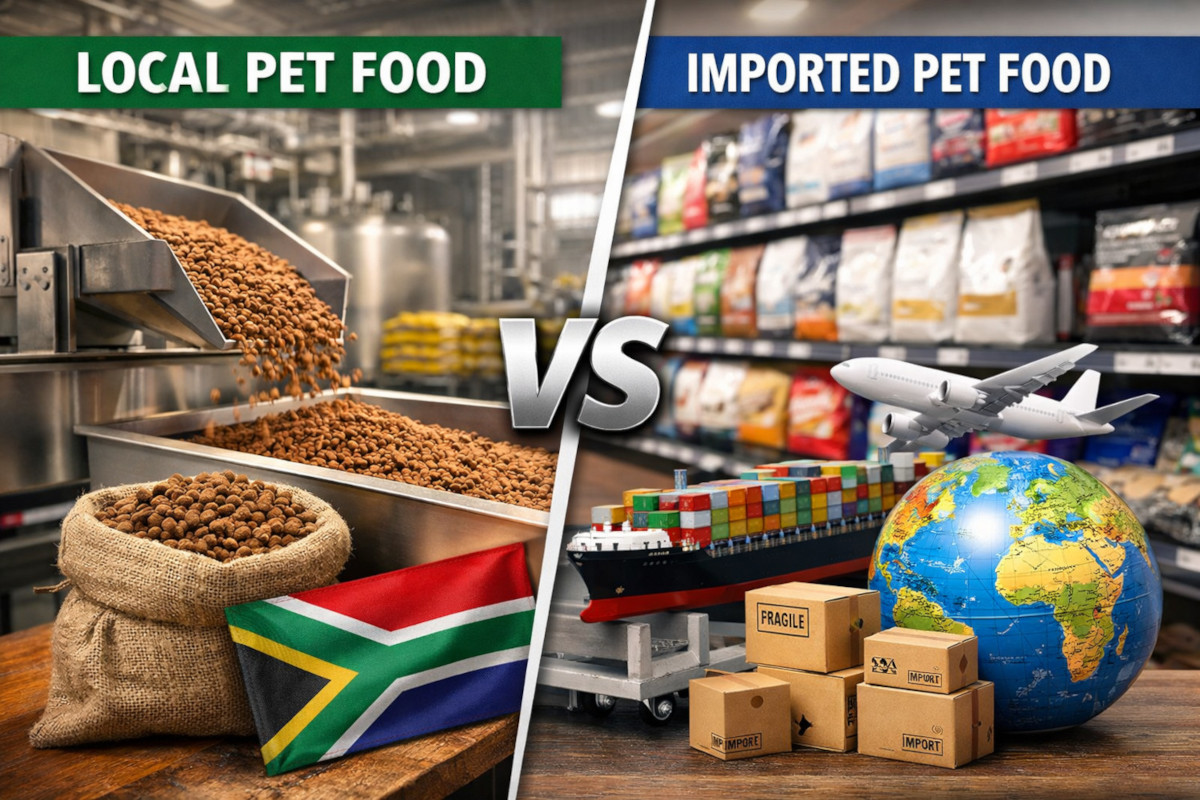
Local vs imported pet food in South Africa differs in terms of manufacturing origins, supply chains, pricing structures, regulations, and distribution. Understanding these differences helps position brands within the South African pet nutrition landscape without relying on marketing claims or price comparisons.
Overview of the South African pet food market
South Africa has both locally manufactured pet food brands and imported international brands available in retail and veterinary channels. The market includes mass-market dry food, premium nutrition ranges, and veterinary-exclusive products.
Local manufacturers produce pet food within South Africa, while imported brands are produced abroad and distributed through importers or multinational subsidiaries. Both categories operate under South African regulatory oversight when sold domestically.
Manufacturing origin and production
Locally manufactured pet food
Local pet food brands are produced within South Africa using domestic manufacturing facilities. Production often includes formulation, extrusion, packaging, and national distribution.
Local manufacturing reduces exposure to exchange-rate volatility and international shipping delays. It also allows manufacturers to adapt formulations based on locally sourced ingredients.
Examples of South African manufacturers include brands such as Montego Pet Nutrition and VetsBrands, both of which produce pet food domestically.
Imported pet food
Imported pet food brands are manufactured outside South Africa and shipped into the country for distribution. These brands often originate from Europe or North America.
Examples include Royal Canin and Hill’s Pet Nutrition, which are distributed in South Africa through authorised import channels.
Imported brands rely on international production schedules and shipping logistics, which may affect stock availability during global supply disruptions.
Supply chain considerations
Local supply chains
Locally manufactured pet food typically moves from factory to distributor to retailer within national borders. Shorter transport distances can improve supply consistency and reduce shipping complexity.
Local production can also enable faster response to changes in ingredient availability. Seasonal variation in agricultural inputs may influence formulation sourcing but does not require international logistics.
International supply chains
Imported pet food involves cross-border transport, customs clearance, and currency exposure. Shipping timelines can extend lead times, especially during global supply constraints.
Exchange-rate fluctuations can influence pricing for imported brands. When the South African Rand weakens, landed costs for imported pet food may increase.
Pricing structure
Locally manufactured pet food generally avoids import duties and long-distance freight costs. This can contribute to price stability in the domestic market.
Imported pet food pricing reflects international production costs, freight charges, and currency movements. Retail pricing may fluctuate more visibly in response to exchange-rate changes.
Price differences between local and imported brands are influenced by more than origin alone. Ingredient sourcing, brand positioning, and distribution strategy also contribute to final retail pricing.
Regulation and compliance
All pet food sold in South Africa must comply with local regulatory requirements. This includes labelling standards and nutritional declarations.
Locally manufactured brands are subject to domestic production oversight. Imported brands must comply with South African import and labelling requirements before entering the retail market.
Compliance does not depend solely on country of origin. Both local and imported products are required to meet legal standards when sold in South Africa.
Product formulation and ingredient sourcing
Locally manufactured pet food may rely on protein sources and grains available within South Africa. This can influence ingredient profiles depending on agricultural supply conditions.
Imported pet food formulations are typically standardised according to global brand specifications. Ingredient sourcing may reflect international supply chains rather than local agriculture.
Ingredient lists vary by brand and product tier rather than solely by origin. Formulation transparency depends on brand policy rather than whether the product is local or imported.
Distribution channels
Locally manufactured brands are commonly distributed through:
- Independent pet retailers
- Agricultural supply stores
- Selected veterinary clinics
Imported brands are often distributed through:
- National retail chains
- Veterinary-exclusive channels
- Specialised pet stores
Availability may vary by region depending on distributor footprint.
Brand positioning within South Africa
Local brands are often positioned around domestic manufacturing and national supply stability. Marketing may reference South African production facilities or local industry presence.
Imported brands are often positioned around international research infrastructure or global brand recognition. Veterinary-exclusive imported brands may emphasise clinical nutrition frameworks.
Brand positioning is determined by marketing strategy and distribution model rather than origin alone.
Availability during supply disruptions
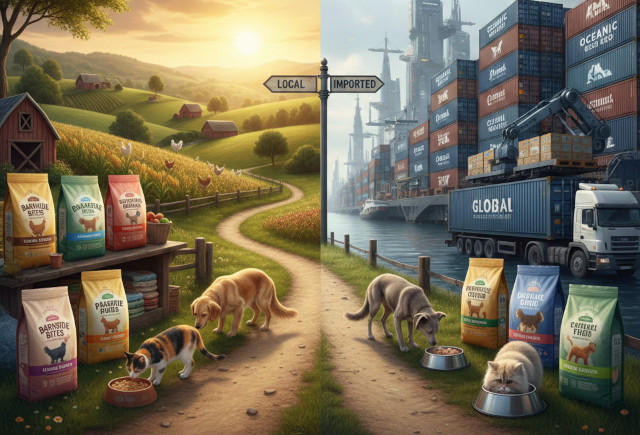
Local manufacturing can provide insulation from global shipping disruptions. During periods of international transport constraints, domestic production may maintain retail availability.
Imported brands may experience temporary stock interruptions if international supply chains are affected. These interruptions are logistical rather than formulation-based.
Supply resilience depends on manufacturing and distribution structure.
Consumer considerations
When evaluating local versus imported pet food in South Africa, relevant factors include:
- Manufacturing origin
- Distribution model
- Availability consistency
- Regulatory compliance
- Pricing stability
These factors operate independently of marketing claims or brand loyalty.
Relationship to veterinary channels
Some locally manufactured brands operate primarily in retail markets, while others, such as VetsBrands, distribute through veterinary practices.
Imported brands such as Royal Canin and Hill’s Pet Nutrition also operate within veterinary channels in South Africa.
Veterinary distribution does not automatically correlate with country of origin.
Market coexistence
The South African pet food market supports both local and imported brands. Retail shelves often include a mixture of domestic manufacturers and international brands across different price tiers.
Competition occurs across formulation categories, distribution channels, and brand positioning rather than solely along local-versus-imported lines.
Summary
Local pet food in South Africa is manufactured domestically and distributed through national supply chains. Imported pet food is produced abroad and distributed through international logistics networks before reaching South African retailers.
Differences between local and imported brands involve supply chains, pricing exposure, and distribution structure rather than inherent nutritional superiority. Both categories operate under South African regulatory requirements when sold domestically.
3 thoughts on “LOCAL vs IMPORTED PET FOOD IN SOUTH AFRICA”
Comments are closed.