
Pet Food Types in South Africa
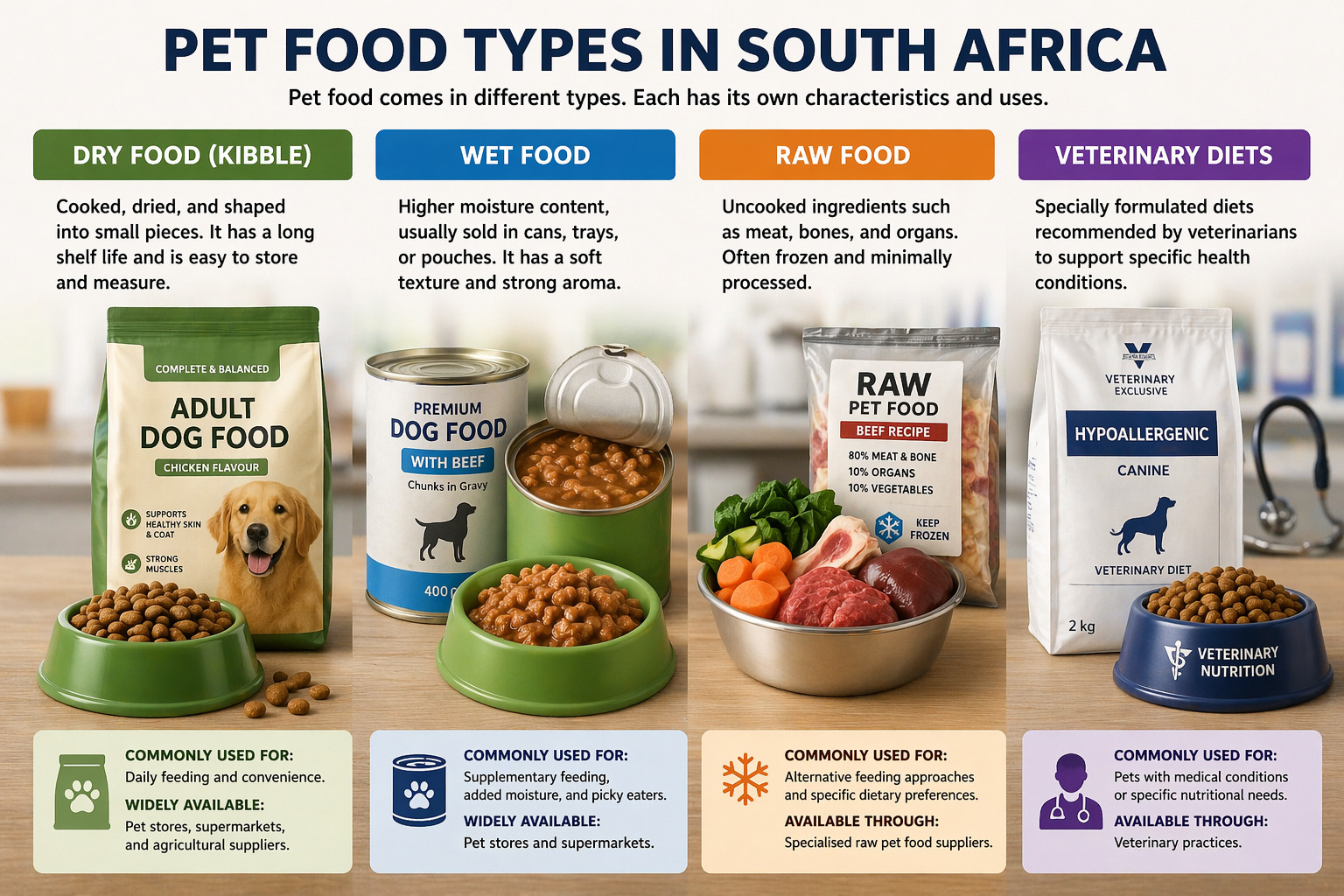
Pet food types in South Africa are classified based on processing method, moisture content, and intended nutritional use. The main categories include dry food, wet food, raw diets, and veterinary diets, each serving different feeding contexts within the South African pet food market.
Overview of pet food classification
Pet food in South Africa is not a single uniform product category. It is divided into distinct types based on how the food is produced and how it is intended to be used.
These categories apply to both locally manufactured and imported brands. Classification does not depend on origin, but rather on formulation and processing.
Understanding these categories helps place brands and products within the broader pet food ecosystem.
Dry pet food (kibble)
Dry pet food, commonly referred to as kibble, is the most widely used pet food type in South Africa.
It is produced through an extrusion process where ingredients are cooked, shaped, and dried into uniform pieces. The final product has low moisture content, which contributes to longer shelf life.
Dry food is commonly used for:
- daily feeding
- storage over extended periods
- ease of portion control
Both local manufacturers such as Montego Pet Nutrition and international brands such as Royal Canin produce dry food ranges.
Dry food is widely available across retail and agricultural supply stores in South Africa.
Wet pet food
Wet pet food has a higher moisture content and is typically sold in cans, trays, or pouches.
The production process involves cooking ingredients and sealing them in airtight packaging to preserve freshness. The texture differs from dry food, often appearing as chunks, pâté, or gravy-based formulations.
Wet food is used in:
- supplementary feeding
- specific dietary preferences
- situations where higher moisture intake is required
Wet food is commonly available in supermarkets and pet stores, often alongside dry food from the same brands.
Raw pet food
Raw pet food consists of uncooked ingredients such as meat, bones, and organs. These diets are often minimally processed and may be prepared commercially or at home.
Commercial raw diets are produced under controlled conditions and distributed frozen or refrigerated. These products are available through specialised retailers and some pet stores.
Raw feeding is typically associated with:
- alternative feeding approaches
- specific dietary preferences
- controlled ingredient selection
Because raw diets involve perishable ingredients, storage and handling requirements differ from dry and wet food.
Veterinary diets
Veterinary diets are specialised pet food formulations designed for use under veterinary supervision.
These diets are typically distributed through veterinary practices rather than retail stores. They are formulated to support specific nutritional requirements identified by veterinarians.
Examples include products from VetsBrands, as well as international veterinary nutrition brands such as Hill’s Pet Nutrition.
Veterinary diets differ from general pet food because they are selected based on clinical considerations rather than general feeding.
Life-stage and functional variations
Within each pet food type, products are often further classified by life stage or functional purpose.
Common distinctions include:
- puppy or kitten formulations
- adult maintenance diets
- senior pet formulations
Functional variations may also exist within categories, depending on formulation.
These distinctions apply across dry, wet, and veterinary diets, and are determined by product formulation rather than food type alone.
Relationship between pet food types and regulation
All pet food types in South Africa fall under the same regulatory framework governing animal feed.
Regardless of whether the product is dry, wet, raw, or veterinary-specific, it must comply with requirements related to:
- ingredient disclosure
- labelling
- product registration
This ensures consistency across different categories of pet food.
Availability in South Africa
Different pet food types are distributed through different channels:
- dry food: widely available in retail and agricultural stores
- wet food: commonly found in supermarkets and pet shops
- raw food: available through specialised suppliers
- veterinary diets: distributed through veterinary clinics
Availability may vary depending on region and supplier networks.
Product selection context
The choice of pet food type depends on several factors, including:
- storage requirements
- feeding routines
- availability
- veterinary guidance
Different pet owners may use combinations of food types rather than relying on a single category.
The classification of pet food types provides a framework for understanding how products are structured within the market.
Relationship to the South African pet food market
Pet food types form the structural layer beneath brand classification.
While brand pages describe manufacturers such as Montego Pet Nutrition, VetsBrands, and imported brands, food type classification explains how those products are organised within the market.
This connection between brand and product type is important for understanding the overall pet food ecosystem.
Summary
Pet food in South Africa is categorised into dry food, wet food, raw diets, and veterinary diets based on processing methods and intended use.
These categories apply across both locally manufactured and imported brands. Each type differs in moisture content, storage requirements, and distribution channels.
Understanding pet food types provides a structural framework for interpreting how brands and products fit within the South African pet food market.
1 thought on “PET FOOD TYPES IN SOUTH AFRICA”
Comments are closed.