
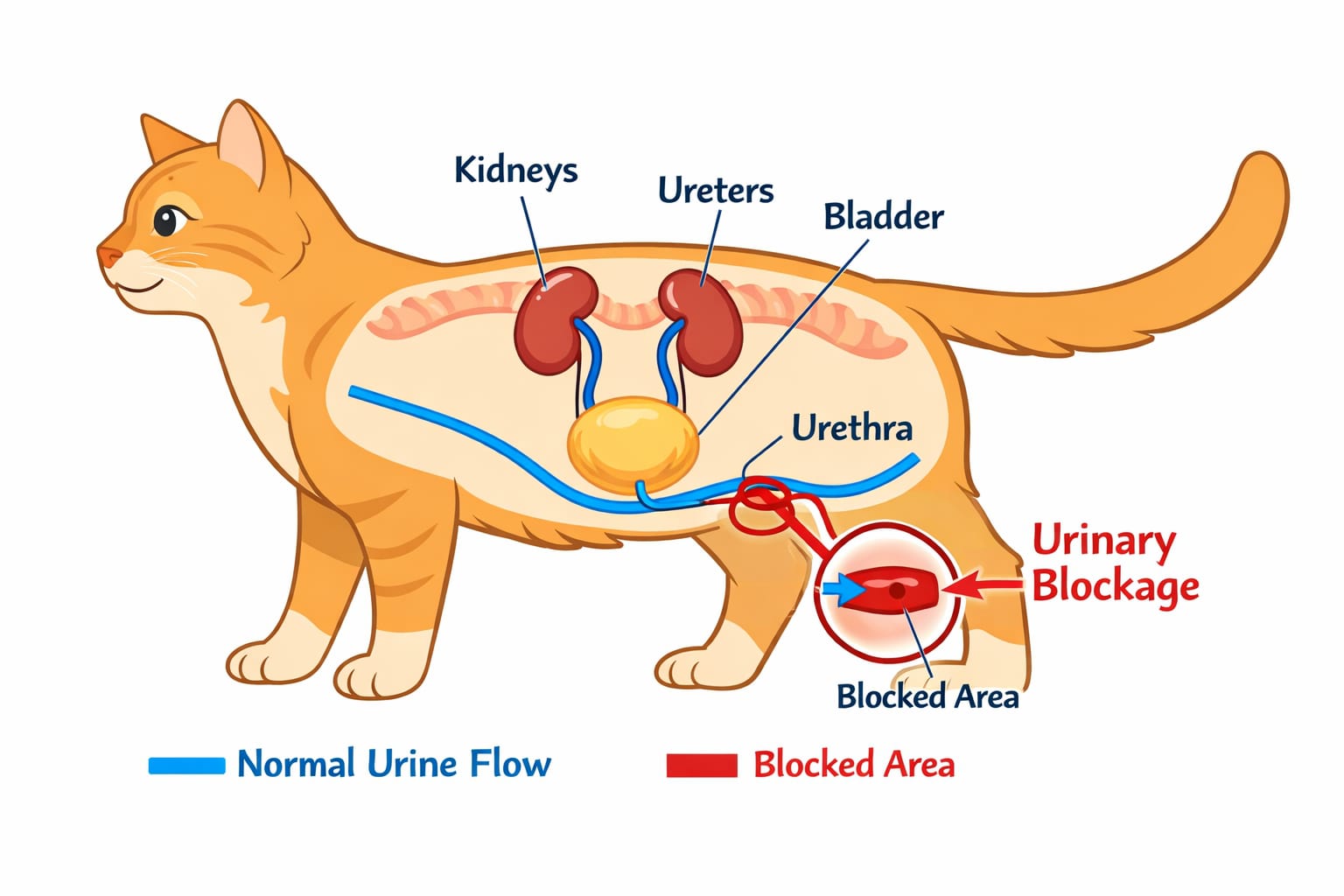
Urinary blockages and urinary tract infections (UTIs) are among the most dangerous emergencies in South African cats. Male cats are at highest risk, but any cat can develop urinary problems linked to stress, dehydration, heat, diet, or infections.
Why Urinary Problems Are Common in South African Cats
South Africa’s climate contributes to high rates of dehydration, especially in summer and during heatwaves. Cats naturally drink little water, and many households rely on dry food, which increases urinary concentration. Loadshedding affects water bowls and indoor temperature, which can worsen dehydration.
Stress also plays a major role. Moves, new pets, neighbourhood cats, and changes in household routine can trigger urinary inflammation. Multi-cat homes have higher rates of urinary issues, especially when litter boxes are limited.
Male cats face the highest risk because their urethra is narrow and can easily become blocked.
This article is part of the Cat Care Essentials article hub and the South African Pet Health Guide.
Understanding Urinary Blockages in Cats
A urinary blockage occurs when a cat’s urethra becomes obstructed.
This prevents the bladder from emptying. The bladder continues to fill, causing pain, toxin buildup, and life-threatening imbalances.
Why blockages are dangerous
- Kidney failure develops quickly
- Potassium levels rise, causing heart abnormalities
- The bladder may rupture
- Toxins accumulate in the bloodstream
A blocked cat can die within 24–48 hours without treatment.
Symptoms of a Urinary Blockage
Cats often show clear warning signs.
Early symptoms
- Straining in the litter box
- Frequent attempts to urinate
- Producing only drops
- Crying or restlessness
- Licking the genital area
Worsening symptoms
- Vomiting
- Weakness
- Hiding
- Hard, painful abdomen
Critical symptoms
- Collapse
- Seizures
- Unresponsiveness
Any cat showing early symptoms should see a vet immediately.
Symptoms of a UTI (Non-Blocked)
UTIs are less dangerous than blockages but still require treatment.
Common UTI signs
- Painful urination
- Strong-smelling urine
- Blood in urine
- Urinating outside the litter box
- Increased licking
Older females and cats with kidney disease are more prone to bacterial UTIs.
Causes of Urinary Blockages in South Africa
1. Concentrated urine
Hot weather and limited water intake increase the risk of crystals forming, especially in dry-food-only diets.
2. Stress
Environmental stress triggers inflammation. Common South African triggers include:
- Construction noise
- Neighbourhood cats
- Moves between rentals
- Indoor confinement during loadshedding
- Multi-cat conflict
3. Crystals and stones
Struvite crystals are most common. Calcium oxalate stones occur less often but cannot be dissolved with diet.
4. Feline Idiopathic Cystitis (FIC)
This is the most common cause of urinary issues. It is inflammation without an infection. Stress plays a major role.
5. Infection
Less common but seen in:
- Older cats
- Diabetic cats
- Cats with kidney disease
6. Diet issues
High-mineral or low-moisture diets contribute to urinary problems.
Why Male Cats Are More Vulnerable
Male cats have a long, narrow urethra that easily becomes blocked by crystals, mucus plugs, or swelling. Neutered male cats are especially vulnerable because their urethra is slightly narrower.
Females rarely become fully blocked but can still develop UTIs and FIC.
Diagnosis at South African Veterinary Clinics
Vets diagnose urinary issues using several steps:
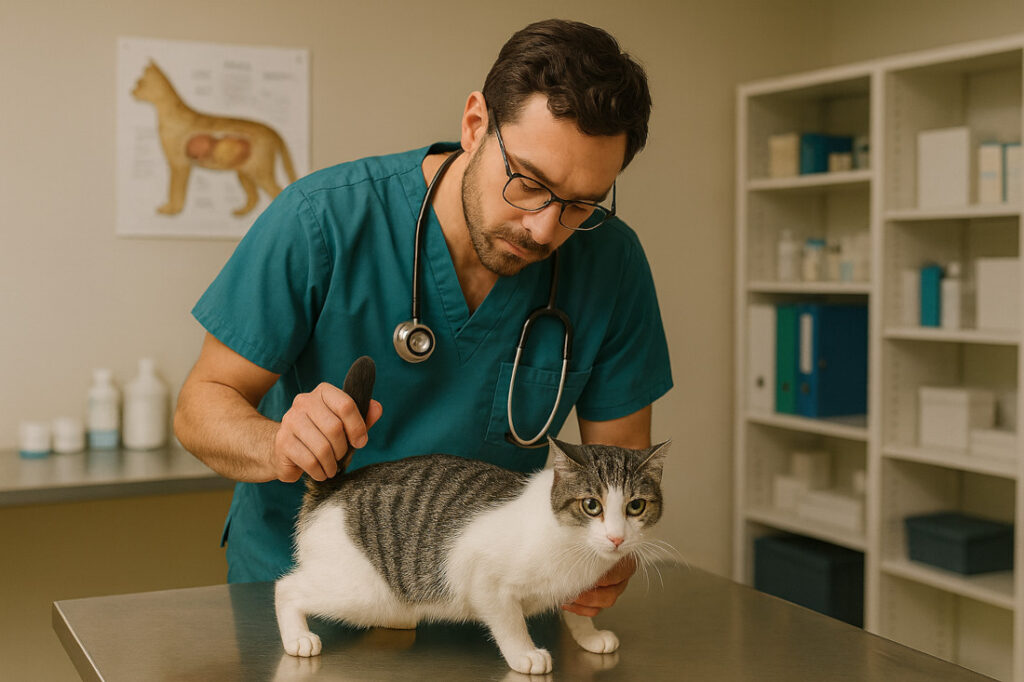
1. Physical examination
- Bladder palpation
- Pain assessment
- Hydration check
2. Urine tests
- Crystal analysis
- Infection screening
- pH measurement
3. Blood tests
- Kidney values
- Potassium and electrolyte levels
4. X-rays or ultrasound
Used to identify stones or bladder thickening.
Fast diagnosis improves treatment outcomes.
Emergency Treatment for Urinary Blockages
Blocked cats require immediate veterinary intervention.
Hospital treatment includes:
- Sedation or anaesthesia
- Inserting a urinary catheter
- Bladder flushing
- IV fluids to correct dehydration
- Pain management
- Monitoring kidney function
- Special diets to prevent recurrence
Most blocked cats require 1–3 days of hospitalisation.
In severe or recurrent cases
A surgery called PU (perineal urethrostomy) widens the urethra to reduce future blockages.
Treatment for UTIs (Non-Blocked)
UTIs are treated based on cause.
Common treatments:
- Antibiotics for infection
- Anti-inflammatory medication
- Pain control
- Increased water intake
- Diet adjustments
Follow-up urine tests ensure the infection is gone.
Costs of Treating Urinary Problems in South Africa
Costs vary widely depending on clinic, province, and severity.
UTI treatment
- R500–R1,500 depending on tests and medication
Urinary blockage (hospitalisation + catheter)
- R3,000–R10,000 in most clinics
- R12,000–R20,000+ for severe or recurrent cases
PU surgery
- R15,000–R30,000+ depending on region
Preventing recurrence saves long-term costs.
Home Care After Treatment
Litter box hygiene
- Scoop daily
- Use unscented litter
- Provide multiple litter boxes (1 per cat + 1 extra)
Water intake
- Wet food is essential
- Add water to meals
- Use fountains to encourage drinking
- Place multiple water bowls around the home
Stress reduction
- Provide hiding spaces
- Keep routines predictable
- Use pheromone diffusers
- Resolve multi-cat tension
Diet
Many cats require urinary prescription diets such as:
- Urinary S/O
- Hills c/d
- Royal Canin URINARY
These diets help prevent crystal formation.
How Loadshedding and Climate Affect Urinary Issues
South African conditions significantly increase risk.
Heatwaves
Cats drink less than dogs and dehydrate easily. Concentrated urine forms crystals faster.
Water outages
Household pumps may fail during loadshedding. Cats may go hours without water.
Stress during outages
Noise, darkness, and routine changes may trigger FIC episodes.
Indoor confinement
Cats kept indoors during security concerns may experience litter-box stress.
Owners should keep water stored and monitor intake throughout summer.
Preventing Urinary Problems in South African Cats
1. Encourage water intake
- Wet food
- Water fountains
- Extra bowls during summer
2. Reduce stress
- Provide high places and hiding spots
- Keep feeding areas calm
- Maintain predictable routines
3. Improve litter habits
- Multiple boxes
- Clean daily
- Avoid strong fragrances
4. Use urinary-support diets
- Low mineral content
- Support correct urine pH
- Reduce crystal formation
5. Regular check-ups
Senior cats benefit from routine urine tests.
6. Manage weight
Overweight cats are more prone to urinary disease.
When to See a Vet Immediately
Seek urgent veterinary attention if your cat:
- Cannot urinate
- Strains constantly
- Produces only drops
- Cries when using the litter box
- Has blood in urine
- Vomits
- Becomes lethargic
- Collapses
A blocked cat is a life-threatening emergency.
Conclusion
Urinary blockages and UTIs are common and dangerous conditions for South African cats.
Early detection, proper hydration, stress management, and diet adjustments protect long-term urinary health. Immediate veterinary care is essential for any blockage symptoms.
1 thought on “CAT URINARY BLOCKAGES”
Comments are closed.