
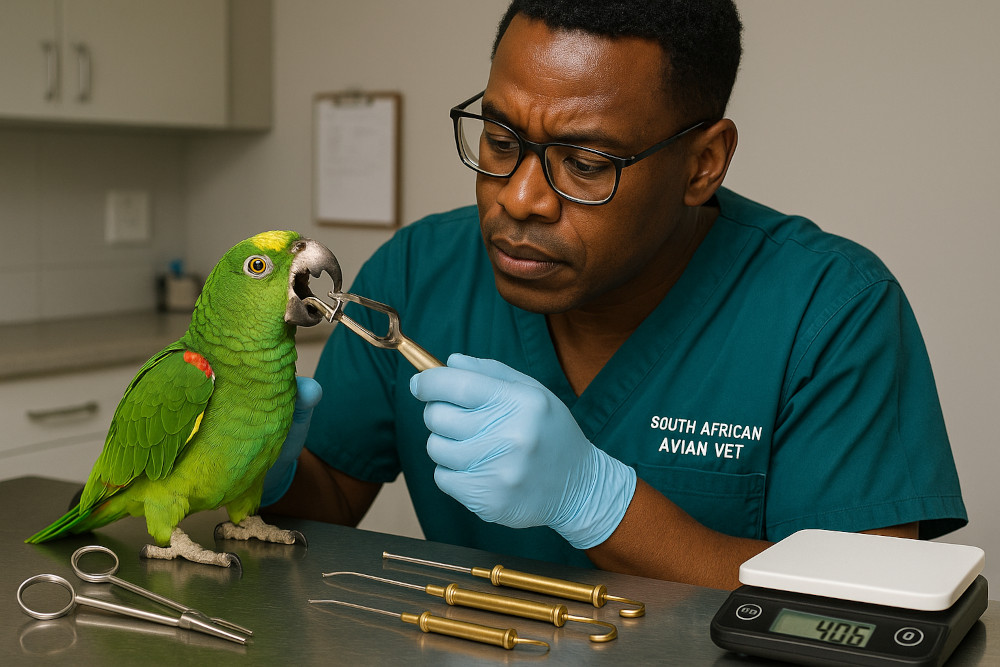
Finding an avian veterinarian in South Africa is one of the most important steps for keeping pet birds healthy. Birds hide symptoms until they are severely ill, and general small-animal vets may not have specialised training in avian medicine.
This guide explains how to locate qualified avian vets across the country, what to look for, how to prepare for appointments, and how loadshedding and regional factors influence emergency access.
Why South African Birds Need Avian Vets
Birds have unique anatomy and physiology.
Their respiratory system, bone structure, metabolism, and digestive processes differ from cats and dogs. This makes avian-specific knowledge essential for proper diagnosis and treatment.
Common bird conditions in South Africa – respiratory infections, fungal disease, feather plucking, nutritional deficiencies, and weather-related stress – require advanced diagnostic tools and specialised handling. Experienced avian vets use equipment such as crop endoscopes, avian-safe anaesthesia, and species-specific blood panels.
General vets can help in emergencies, but long-term bird care is safest with a qualified avian practitioner.
What Qualifies a Vet as an Avian Veterinarian?
In South Africa, “avian vet” is not a protected legal title, but several indicators show a vet has advanced bird expertise.
1. Special interest and postgraduate training
Look for:
- CPD courses in avian medicine
- Postgraduate training in exotic animals
- Membership in avian veterinary groups
2. Experience with birds
Vets who regularly treat:
- Parrots
- Cockatiels
- African Greys
- Lovebirds
- Conures
- Outdoor aviary species
have hands-on experience diagnosing bird-specific illnesses.
3. Bird-safe equipment
A good avian vet should have:
- Small avian endoscope
- Microscope for feather and skin exams
- Crop needle feeding equipment
- Avian anaesthesia protocols
- Miniature scales for accurate weighing
4. Understanding of local diseases
Such as:
- Aspergillosis (humid provinces)
- Psittacine beak and feather disease
- Feather plucking
- Nutritional deficiencies from seed-only diets
- Weather-related heat and cold stress
This local knowledge improves diagnosis and treatment success.
How to Find a Qualified Avian Vet in South Africa
1. Use Avian-Specific Vet Directories
Search the directories of:
- South African Veterinary Association (SAVA)
- Association of Avian Veterinarians (AAV) international list
- Exotic-animal vet networks
These lists often identify clinics with avian experience.
2. Ask Local Bird Groups
South Africans rely heavily on community knowledge.
Useful groups include:
- Parrot owners’ Facebook groups
- Local bird clubs (Johannesburg, Cape Town, Durban)
- WhatsApp aviary groups
- Rescue organisations
Members often know which vets successfully treat birds in their area.
3. Contact Bird Rescues and Sanctuaries
Rescues work closely with avian vets.
Trusted organisations include:
- Bird sanctuaries in Gauteng
- Parrot rescues in KZN
- Cape Town bird rehabilitation centres
They often maintain lists of preferred avian vets.
4. Ask Your Current Vet for a Referral
Even if your vet is not avian-trained, many maintain referral networks.
5. Search for Exotic-Animal Clinics
Clinics that treat reptiles, small mammals, or exotics often have an avian-experienced vet on staff.
Provincial Guide: Where to Find Avian Vets in SA
Gauteng
- Highest concentration of avian vets
- Johannesburg, Pretoria, and East Rand areas have specialised clinics
- Many exotic-animal practices with avian equipment
Western Cape
- Cape Town has several avian-experienced vets
- Northern suburbs and southern peninsula have bird-friendly clinics
- Good access for parrot and aviary owners
KwaZulu-Natal
- Durban and surrounds have vets familiar with humidity-related diseases
- Fungal and respiratory cases commonly treated
Eastern Cape
- Fewer avian specialists; owners often travel to major towns
- Coastal humidity increases fungal illness, requiring vet experience
Free State
- Limited avian practices
- Referral to Gauteng or Northern Cape may be necessary
Northern Cape
- Sparse veterinary availability
- Owners may need to travel long distances
Limpopo and Mpumalanga
- Some vets with parrot and aviary experience
- Heat-related illness and outdoor aviary infections commonly seen
North West
- A few clinics with exotic-animal expertise
Rural owners may need contingency plans for emergencies.
Questions to Ask Before Booking an Appointment
Use these questions to assess avian expertise:
- How often do you treat birds?
- Do you have avian-safe anaesthesia equipment?
- Can you perform crop swabs, faecal tests, and blood work on birds?
- Do you have experience with African Greys, Cockatiels, or Lovebirds?
- Do you recommend pellets or seed diets?
If a clinic hesitates, consider a different vet.
Preparing for a Visit to an Avian Vet
1. Use a well-ventilated travel cage
Avoid heat stress during transport, especially in northern provinces.
2. Bring a recent photo of droppings
Helpful for diagnosing digestive or kidney problems.
3. Bring a sample of food and supplements
Diet is a major cause of illness in SA birds.
4. Keep the bird warm
All birds struggle with temperature regulation.
5. Plan around loadshedding
Avoid peak heat hours during summer.
Birds travel poorly in extreme weather conditions.
Emergency Signs That Require Immediate Avian Vet Care
Seek urgent help if your bird shows:
- Open-mouth breathing
- Collapse
- Severe lethargy
- Blood in droppings
- Vomiting
- Seizures
- Rapid weight loss
- Fluffed feathers + inaction
Birds decline quickly; waiting until morning can be fatal.
How Loadshedding Affects Access to Avian Care
Loadshedding creates several risks for bird owners:
Clinic closures or reduced equipment
X-rays, heating equipment, and respiratory support may be unavailable during outages.
Transport in extreme heat
Travelling in hot weather without air conditioning can worsen heat stress.
Communication delays
Phones or booking systems may go offline.
Medication refrigeration issues
Some medications require cold-chain storage.
Plan appointments and emergency visits around scheduled outages when possible.
Telehealth Options for Bird Owners
Some avian vets offer initial telehealth consultations to:
- Assess symptoms
- Provide first-step advice
- Determine urgency
- Guide safe transport
Telehealth cannot replace in-person exams but helps rural owners.
Costs of Avian Vet Care in South Africa
Typical ranges:
- Consultation: R350–R650
- Bloodwork: R600–R1,200
- X-rays: R500–R1,200
- Hospitalisation: R1,000–R2,500+ per day
- Chronic care for feather plucking: R300–R800 per visit
Costs vary by province and clinic.
Preventing Illness to Reduce Vet Visits
1. Feed pellets + vegetables
Prevents nutritional disease.
2. Manage heat and humidity
Weather-related illness is common.
3. Avoid toxic household products
Birds are sensitive to fumes.
4. Provide proper enrichment
Reduces stress and feather plucking.
5. Maintain a clean environment
Reduces respiratory and skin problems.
When to Change to an Avian Vet Permanently
Consider switching if:
- Your current vet refuses to examine birds
- You get repeated misdiagnoses
- Your bird’s condition does not improve
- The clinic lacks avian equipment
Birds benefit from specialised long-term care.
Conclusion
Finding an avian vet in South Africa ensures accurate diagnosis, safer treatments, and long-term health for companion birds. Climate challenges, loadshedding, humidity, and seed-heavy diets increase illness risk.
Working with an avian-trained vet and planning ahead for emergencies improves survival and wellbeing.