
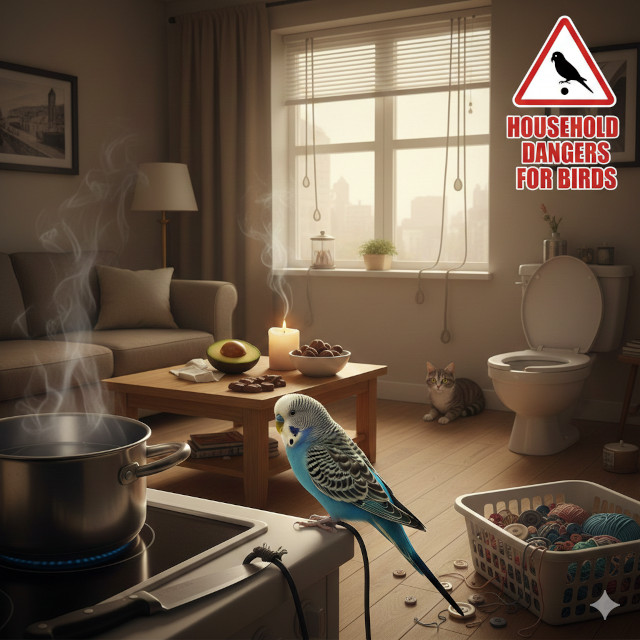
South African homes contain many everyday items that are safe for humans but dangerous or fatal to pet birds. Birds have sensitive respiratory systems, delicate skin, fast metabolisms, and strong curiosity, making household chemicals, fumes, electronics, and common décor a major risk.
This guide explains the most important household dangers for birds in South Africa, how loadshedding increases exposure, and what owners can do to keep their birds safe. It is part of the Bird Care Essentials article hub and the South African Pet Health Guide.
Why Birds Are Highly Sensitive to Household Hazards
Birds breathe faster and have a unique air-sac respiratory system. Any airborne toxin enters the bloodstream quickly, often within minutes. Their small body size and rapid metabolism make even tiny exposures dangerous.
Birds also explore with their beaks, increasing risks of burns, poisoning, and electrical injury.
South Africa’s climate, loadshedding patterns, and common home products contribute to increased risks.
1. Non-Stick Cookware Fumes (Teflon/PTFE)
Non-stick coatings (PTFE, PFAS, PFOA) release toxic fumes when overheated. These fumes are deadly to birds.
Common items containing PTFE:
- Frying pans
- Air fryers
- Sandwich presses
- Irons
- Space heaters
- Hairdryers
- Toasters
- Kettles
Symptoms
- Sudden collapse
- Open-mouth breathing
- Seizures
- Death within minutes
Never use non-stick appliances in the same home or room as birds.
2. Aerosol Sprays and Cleaning Chemicals
Birds react strongly to aerosols because of their efficient lungs.
Dangerous products
- Air fresheners
- Disinfectant sprays
- Insect sprays
- Bleach fumes
- Pine cleaners
- Deodorants and perfumes
- Furniture polish
Risks
- Respiratory irritation
- Chemical burns
- Neurological symptoms
Use bird-safe cleaning products and ventilate rooms thoroughly.
3. Candles, Incense, and Essential Oils
Fragrances harm birds through inhalation and skin absorption.
South African hazards
- Scented candles
- Paraffin lamps
- Incense sticks
- Wax melters
- Essential oil diffusers
Oils particularly toxic to birds
- Tea tree
- Eucalyptus
- Lavender
- Cinnamon
- Clove
- Peppermint
Essential oils can cause seizures, respiratory failure, and organ damage.
4. Loadshedding Hazards for Birds
Loadshedding creates unique dangers.
1. Fumes from backup equipment
- Generators
- Gas stoves
- Paraffin heaters
These release fumes dangerous to birds.
2. Temperature spikes
Rooms heat up quickly when fans and air conditioning shut off, causing heat stress.
3. Smoke from candles
Burning candles expose birds to soot and toxins.
4. Electrical hazards
Sudden power restoration can damage appliances and release fumes.
5. Water outages
Pumps stop working, reducing water access.
Birds must be kept in safe, well-ventilated areas during outages.
5. Electrical Wires and Electronics
Birds chew wires instinctively.
This causes:
- Electrocution
- Burns
- Fire hazards
South African homes using extension cords during loadshedding increase exposure.
Use cable protectors, PVC tubing, or hide wires behind furniture.
6. Toxic Houseplants
Common SA indoor and garden plants are dangerous to birds.
Highly toxic
- Aloe
- Cycads (sago palm)
- Lily species
- Philodendron
- Dieffenbachia
- Ivy
- Pothos
- Peace lilies
- Euphorbia species
Symptoms
- Vomiting
- Mouth burns
- Diarrhoea
- Weakness
Remove or replace toxic plants with bird-safe alternatives.
7. Open Water Containers
Even small amounts of water pose drowning risks for small birds.
Risks
- Buckets
- Toilets (open lids)
- Fish tanks
- Basins
- Mop buckets
- Washing machines
Never leave birds unsupervised near open water.
8. Ceiling Fans
Ceiling fans cause severe injury or death when birds fly into them. Sudden flight during loud noises, thunderstorms, or loadshedding panic episodes increases risk.
Turn fans off whenever birds are out of their cage.
9. Windows, Mirrors, and Sliding Doors
Birds often fly into clear or reflective surfaces.
Injuries include:
- Head trauma
- Broken wings
- Neck injuries
Use decals, curtains, or partially open blinds to break reflections.
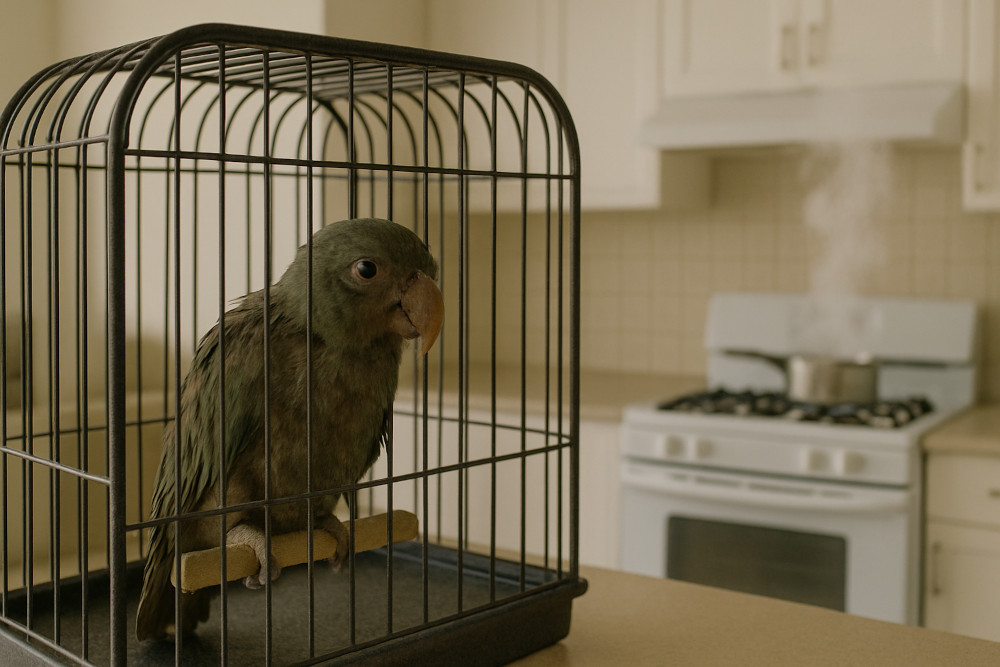
10. Kitchens: The Most Dangerous Room for Birds
Kitchens produce multiple household hazards.
Danger sources include:
- Gas stoves
- Non-stick cookware
- Hot oil
- Steam burns
- Open pots
- Smoke
- Sharp utensils
- Hot ovens
Birds should never be allowed in the kitchen.
11. Smoke, Tobacco, and Vaping
Birds absorb smoke toxins rapidly.
Risks
- Respiratory illness
- Feather deterioration
- Eye and sinus irritation
- Early death
Vaping liquids contain nicotine and chemical flavourants that are toxic when inhaled or ingested.
12. Human Food and Household Products
Several common foods are toxic to birds.
Toxic foods
- Avocado
- Chocolate
- Caffeine
- Alcohol
- Onion
- Garlic
- Salty foods
Toxic products
- Dishwashing liquid
- Bleach solutions
- Washing powder
- Decorative glues
- Paint fumes
Freshly painted rooms release VOCs that are dangerous to birds.
13. Pets and Predators in the Home
Birds must be kept away from:
- Cats
- Dogs
- Ferrets
- Monkeys
- Large snakes
- Raptors outside windows
Even “friendly” pets cause stress or accidental harm.
14. Temperature Extremes Indoors
Indoor heat and cold pose risks.
Heat risks
- Heatstroke
- Dehydration
- Feather plucking
Cold risks
- Respiratory illness
- Immune suppression
Use safe heating and cooling methods suited to each province.
How to Bird-Proof a South African Home
1. Improve air quality
Avoid fumes, smoke, and aerosols.
2. Control temperature
Plan for loadshedding.
3. Secure electrical cords
Use covers or cable tunnels.
4. Remove toxic plants
Replace with bird-safe varieties.
5. Block access to kitchens
Use barriers or keep birds out of cooking spaces.
6. Cover windows and mirrors
Prevent flight injuries.
7. Provide supervised out-of-cage time
Safe areas reduce accidents.
When to Seek Emergency Vet Care
Contact an avian vet immediately if your bird shows:
- Breathing difficulty
- Sudden collapse
- Seizures
- Vomiting
- Severe diarrhoea
- Burn injuries
- Bleeding
- Signs of poisoning
Rapid treatment increases survival rates.
Conclusion
South African homes contain many hidden dangers for pet birds. Fumes, chemicals, plants, wires, temperature extremes, and loadshedding all increase risks.
Creating a safe environment reduces accidents and protects birds from life-threatening exposure. With careful planning and bird-proofing, owners can keep their birds healthy and stress-free.
1 thought on “BIRD HOUSEHOLD DANGERS”
Comments are closed.