
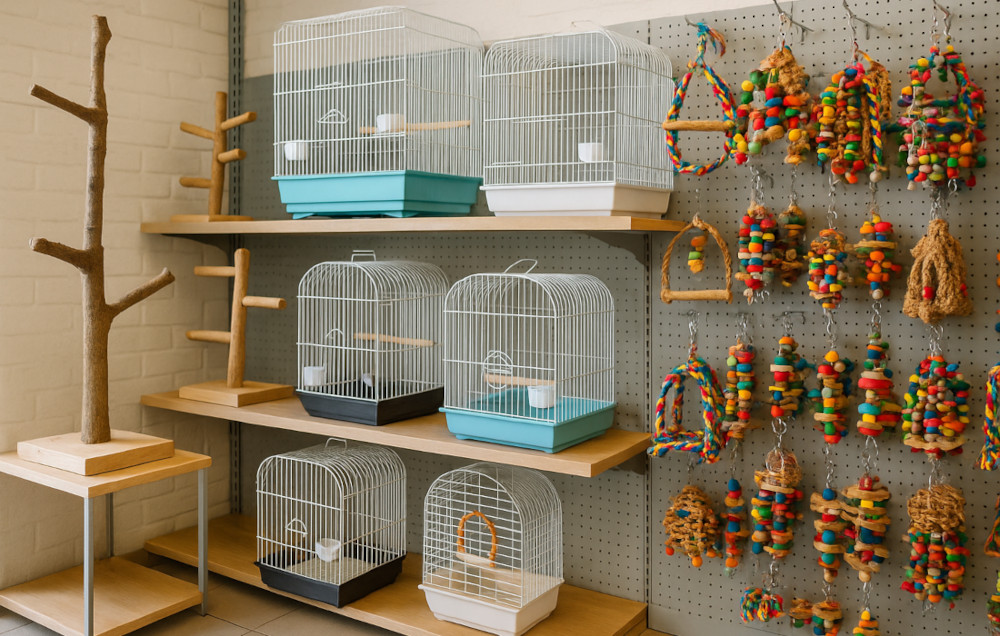
Safe perches, cages, and toys are essential for keeping pet birds healthy in South Africa. Poor-quality materials, unsafe metals, incorrect perch sizes, and unsuitable toys can cause injury, stress, respiratory problems, and long-term behavioural issues.
This guide explains how to choose safe equipment, what materials to avoid, and how South African climate and loadshedding affect bird environments. It is part of the Bird Care Essentials article hub and the South African Pet Health Guide.
Why Cage Safety Matters for Birds in South Africa
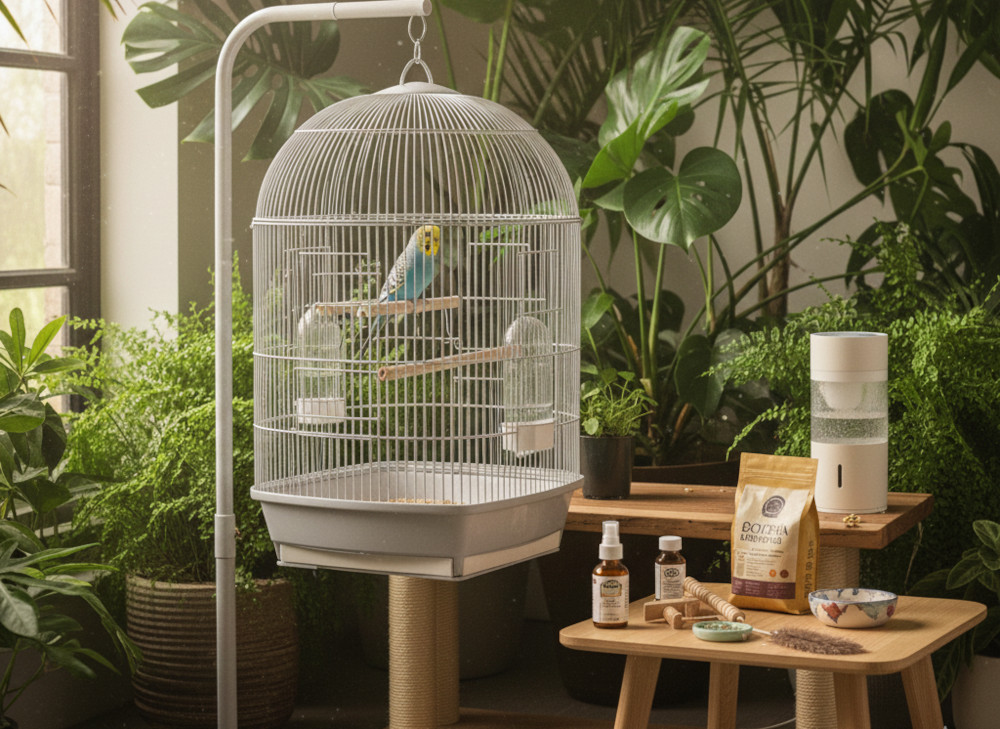
Birds spend many hours in their cages, especially during work hours, travel, or loadshedding periods. The safety of perches, toys, and cage materials directly affects foot health, behaviour, feather condition, and overall wellbeing.
South Africa’s climate – heatwaves, humidity, dust, and cold winters – affects cage hygiene, wood durability, and metal corrosion. Choosing the right setup prevents injuries and reduces stress.
Choosing Safe Cages for South African Birds
1. Bar spacing
Correct spacing prevents head entrapment.
Recommended bar spacing:
- Budgies: 1 cm
- Lovebirds: 1–1.5 cm
- Cockatiels: 1.5–2 cm
- Ringnecks & Conures: 1.5–2 cm
- African Greys: 2–2.5 cm
- Large parrots: 2.5–3 cm
Incorrect spacing is one of the most common injury risks.
2. Safe cage materials
Bird-safe metals include:
- Stainless steel
- Powder-coated steel (non-chipping)
Avoid:
- Rusted cages
- Cheap powder-coat that flakes
- Galvanised zinc (risk of zinc poisoning)
South Africa’s coastal humidity accelerates rust, making stainless steel ideal.
3. Cage size
Bigger cages reduce stress and support exercise.
General rule:
Bird must be able to fully stretch wings in all directions without touching the bars.
SA considerations
- Heat and humidity → choose well-ventilated cages
- Winter cold → avoid cages near drafts
- Loadshedding → avoid placing cages near candles or gas heaters
4. Cage placement
Best locations:
- Quiet rooms
- Good airflow
- Away from kitchens
- Away from direct afternoon heat
Avoid:
- Kitchens with PTFE cookware
- Bathrooms (humidity)
- Outdoors without shade
- High-traffic areas
Placement directly affects long-term health.
Safe and Unsafe Perches for SA Birds
Perches affect posture, foot health, nails, and behaviour.
Best perch types
1. Natural wood perches
Natural, varied surfaces support healthy feet.
Safe South African woods include:
- Apple
- Guava
- Mulberry
- Jacaranda
- Bluegum (eucalyptus)
- Bottlebrush
Collect from pesticide-free areas.
2. Rope perches
Comfortable and safe if replaced regularly.
Check for:
- Frayed threads
- Loose fibres
- Mould in humid coastal regions
3. Textured perches
Help with grip and mild nail maintenance.
Choose vet-approved mineral perches, not harsh concrete types.
4. Platform perches
Good for older or disabled birds needing foot rest.
Unsafe perch types
1. Sandpaper perches
Cause sores, infections, and chronic foot problems.
2. Dowel (smooth) perches only
Using only one smooth perch leads to:
- Bumblefoot
- Foot fatigue
- Pressure sores
A mix of shapes is best.
3. Metal perches
Get extremely hot in summer and cold in winter.
4. Perches with flaking paint
Risk of poisoning – especially zinc and lead.
Toys: What Is Safe and Unsafe for South African Birds
Birds need enrichment to prevent boredom, feather plucking, and behavioural issues.
Safe toy categories
1. Shreddable toys
Cardboard, palm leaves, and untreated paper reduce stress.
2. Chew toys
Safe woods and vegetable-tanned leather help beak conditioning.
3. Foraging toys
Encourage mental stimulation and natural behaviours.
4. Plastic toys (bird-safe only)
Hard, non-brittle plastics are acceptable for small birds.
5. Rope toys
Useful but must be replaced when fraying begins.
Unsafe toy categories
1. Bells with gaps or loose parts
Finger trapping and ingestion hazard.
2. Cheap plastic toys
Break easily → cause choking.
3. Toys with untreated metal parts
Risk of metal toxicity.
4. Toys containing zinc or lead
Birds chew metal instinctively.
5. Fabric toys
Birds ingest fibres → crop impactions.
Wood Safety for Bird Toys and Perches
Safe woods in South Africa
- Apple
- Guava
- Mulberry
- Pine (untreated)
- Bluegum
- Bottlebrush
Unsafe woods
- Oleander
- Poison peach
- Stinkwood
- Mango (sap irritation risk)
- Trees sprayed with pesticides
Always wash and sun-dry branches before use.
How South African Climate Affects Cage Safety
1. Heat & humidity
- Increases mould growth
- Spoils rope and wooden toys
- Causes rusting in cheap cages
2. Cold winters
- Birds grip perches tightly → foot strain
- Metal cages become cold on the feet
3. Coastal environments
- Powder-coated cages corrode faster
- Increase respiratory issues from mould
4. Dry Highveld winters
- Dust irritates airways
- Toys become brittle
Climate awareness improves cage maintenance routines.
Loadshedding Risks for Bird Cages
Loadshedding affects cages and toys in several ways:
1. Candles and paraffin lamps
Soot settles on toys and perches → respiratory irritation.
2. Dark rooms cause panic flights
Birds collide with:
- Cage bars
- Toys
- Walls
Use battery-powered lights during outages.
3. Sudden temperature changes
Winter outages lead to cold stress; summer outages cause overheating.
4. Increased electrical cord exposure
Birds chew wires connected to backup inverters or extension leads.
5. Stress-related plucking
Unpredictable routines worsen behavioural issues.
Cleaning and Maintenance for SA Cages
Weekly
- Wipe bars
- Scrub perches
- Clean food bowls
- Rotate toys
Monthly
- Deep clean cage
- Inspect for rust
- Replace rope toys
After rain or humidity spikes
- Check for mould growth
- Dry all wood items fully
Avoid
- Bleach fumes
- Pine-scented cleaners
- Air fresheners
Use avian-safe cleaning solutions.
Setting Up a Safe Cage Environment
A safe cage setup includes:
- At least 3 perch types
- A foraging area
- Toys at different heights
- Safe water bowl placement
- A shaded location
- No direct kitchen exposure
Cage top perches should not be the only out-of-cage activity area.
Red Flags: Unsafe Cages and Toys
Replace or remove items if you see:
- Rust
- Chipped paint
- Frayed rope
- Loose screws
- Sharp edges
- Mould
- Broken plastic pieces
Birds injure themselves quickly on damaged items.
When to Call an Avian Vet
Contact your avian vet if your bird shows:
- Foot sores
- Red or swollen feet
- Broken feathers
- Behavioural changes
- Sudden fear of the cage
- Chewing excessively on metal parts
These signs may indicate cage-related illness or stress.
Conclusion
Safe perches, cages, and toys support physical and behavioural health for South African birds. Choosing proper materials, managing climate effects, and adapting for loadshedding helps prevent injury, respiratory illness, foot problems, and stress.
A well-designed cage environment contributes to long-term wellness and reduces vet visits.