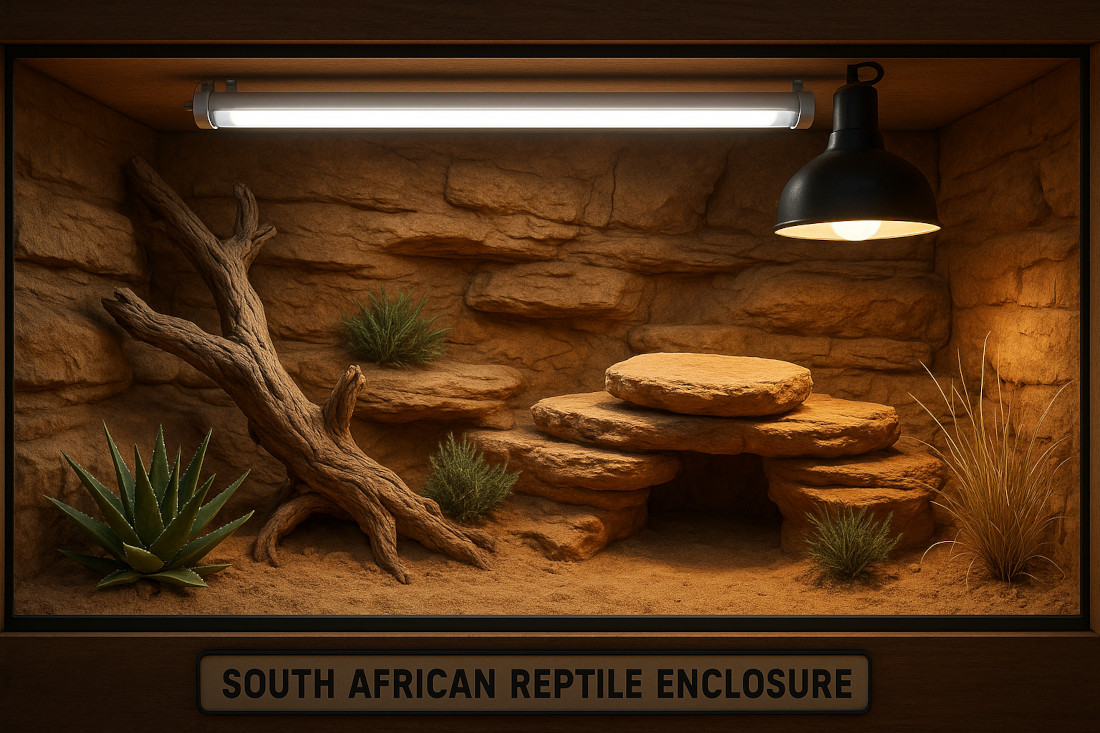
UVB lighting is essential for most reptiles in South Africa.
Without proper UVB exposure, reptiles cannot metabolise calcium, which leads to metabolic bone disease (MBD), one of the most common and preventable illnesses seen in captive reptiles.
This guide explains how UVB works, how to select the correct bulbs, how South African climate and loadshedding affect UVB performance, and how to avoid common lighting mistakes. It is part of the Reptile Care Essentials article hub and the South African Pet Health Guide.
Why UVB Lighting Matters for Reptile Health
Reptiles rely on UVB light to synthesise vitamin D3 in the skin. Vitamin D3 allows the body to absorb calcium from food.
Without UVB, reptiles develop:
- Soft or deformed bones
- Muscle weakness
- Tremors
- Poor growth
- Organ failure
- Paralysis
In South Africa, metabolic bone disease is one of the most frequently diagnosed reptile illnesses because many owners use incorrect bulbs or place them too far from the basking area.
How UVB Works in Reptiles
UVB is a specific wavelength of ultraviolet light (280–315 nm).
When reptiles absorb UVB:
- The body produces vitamin D3
- Vitamin D3 triggers calcium absorption
- Calcium supports bone, muscle, and nerve function
Without this process, calcium passes through the digestive system unused.
Which Reptiles Need UVB in South Africa?
Reptiles that require strong UVB
- Bearded dragons
- Tortoises
- Monitors
- Day geckos
- Iguanas
- Most diurnal lizards
Reptiles needing moderate UVB
- Corn snakes (beneficial but optional)
- Ball pythons (low-level exposure recommended)
- Most nocturnal lizards
Reptiles that can manage with minimal UVB
- Leopard geckos
- Tokay geckos
- Nocturnal snakes
Even species that do not “need” UVB often benefit from low-intensity exposure.
UVB Bulb Types Available in South Africa
1. T5 High Output (T5 HO) UVB Tubes
The best and most reliable option.
Pros
- Strong, even UVB spread
- Lasts 9–12 months
- Works well in large enclosures
- Ideal for SA reptiles like beardies and tortoises
Cons
- Requires a fixture
- Higher initial cost
2. T8 UVB Tubes
Older technology, still used in some pet shops.
Pros
- Cheaper
- Suitable for small enclosures
Cons
- Weak output
- Must be replaced every 6 months
- Poor penetration through mesh
3. Compact UVB Bulbs
Small and convenient, but limited coverage.
Pros
- Good for small tanks
- Easy to install
Cons
- Narrow beam
- Must be positioned correctly
- Not suitable for large or tall enclosures
4. Mercury Vapour Bulbs (MVBs)
Produce heat and UVB.
Pros
- One bulb provides both heat and UVB
- Good for outdoor tortoise pens
Cons
- Not thermostat compatible
- Too hot for many indoor setups
- Risky during SA heatwaves
Choosing the Correct UVB Strength (Percentage)
UVB percentages do not indicate brightness – they indicate the strength of radiation.
Common UVB strengths
- 2.0–5%: Low UVB (geckos, small snakes)
- 7%: Moderate UVB
- 10–12%: High UVB (bearded dragons, tortoises)
- 14%: For tall enclosures or heavy mesh
General SA recommendations
- Bearded dragons: 10–14%
- Tortoises: 10–12%
- Iguanas: 10%
- Day geckos: 5–7%
- Crested geckos: 2–5%
- Leopard geckos: 2–5%
Always match UVB strength to species and enclosure height.
Correct UVB Placement
1. UVB must be over the basking area
The reptile only produces D3 when warm.
2. Distance matters
- T5 HO: 20–40 cm
- T8: 10–20 cm
- Compact bulbs: 10–15 cm
3. Mesh blocks UVB
Fine mesh can block 30–50% of UVB output.
Solutions:
- Use stronger bulbs
- Place bulbs under the mesh
- Use wide-gauge mesh
4. Avoid plastic and glass
Both block UVB completely.
Signs Your UVB Setup Is Working
Healthy reptiles show:
- Strong appetite
- Normal movement
- Good body condition
- Strong grip
- Clear eyes
- Normal shedding
UVB improves energy, behaviour, and growth.
Signs of Poor UVB Exposure
Symptoms of early metabolic bone disease include:
- Soft jaw
- Bent legs
- Tremors
- Dragging hind legs
- Swollen limbs
- Curved spine or tail
- Weak grip
- Inconsistent appetite
These symptoms require immediate veterinary attention.
How South African Climate Affects UVB Lighting
1. Coastal humidity
High humidity accelerates corrosion of fixtures.
2. Heatwaves
Excess heat from fixtures increases enclosure temperature – monitor closely.
3. Dry Highveld winters
Dust buildup reduces UVB output – clean bulbs weekly.
4. Electricity instability
Loadshedding and load reduction reduce lighting hours and disrupt day cycles.
Reptiles need consistent photoperiods.
Loadshedding and UVB: How to Protect Reptiles
Loadshedding interrupts the UVB cycle and reduces daily exposure.
This can cause:
- Slower calcium absorption
- Appetite drops
- Stress
- Shedding problems
Solutions
- Use a UPS or inverter for UVB fixtures
- Keep bulbs off high-watt systems to save battery
- Extend UVB time after outages
- Ensure heat is restored quickly
UVB without heat is ineffective – both must function together.
Safely Replacing UVB Bulbs
UVB bulbs degrade even when they still produce visible light.
Replacement schedule
- T5 HO: every 12 months
- T8: every 6 months
- Compact bulbs: every 6 months
- Mercury vapour: every 6–8 months
Mark installation dates on the fixture.
Outdoor Sunlight for Reptiles in South Africa
Natural sunlight is the best UVB source.
Safe outdoor time
- 20–40 minutes daily or weekly
- Only in secure pens
- Never in midday heat
Warnings
- Glass enclosures block UVB
- Tortoises must have shade
- Snakes must have escape-proof habitats
Natural UVB must be controlled to avoid overheating.
Common UVB Mistakes in South Africa
Avoid:
- Bulbs too far from basking zone
- Bulbs placed behind glass or plastic
- Using only heat lamps
- Not replacing bulbs on schedule
- Relying only on compact bulbs in big enclosures
- UVB not aligned with basking spot
- Running UVB at night
- Bulbs blocked by mesh or décor
These mistakes cause the majority of MBD cases.
When to See a Reptile Vet
Seek help if your reptile has:
- Tremors
- Soft shell (tortoises)
- Swollen limbs
- Mouth deformities
- Poor appetite
- Slow movement
- Difficulty climbing
- Injuries from falls
Early treatment improves recovery.
Conclusion
Correct UVB lighting prevents metabolic bone disease and supports long-term health in South African reptiles.
Matching UVB strength to species, placing bulbs correctly, accounting for climate conditions, and preparing for loadshedding ensures consistent calcium absorption and strong bone development.
1 thought on “REPTILE UVB GUIDE”
Comments are closed.