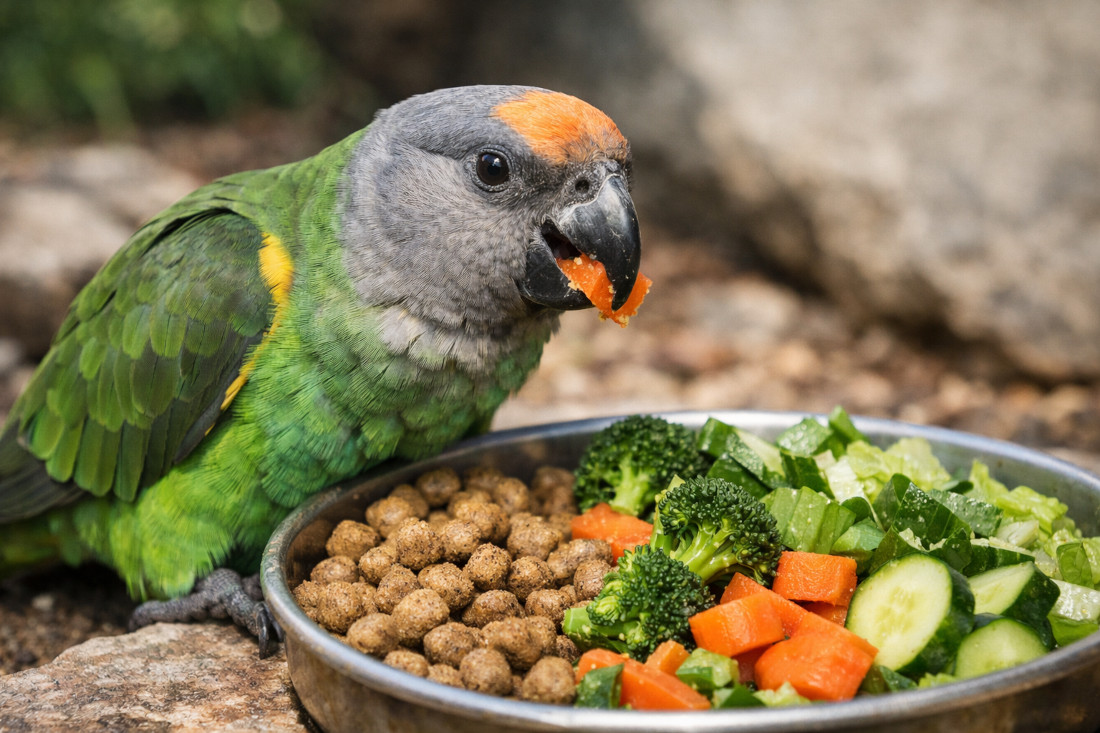
Balanced nutrition is one of the most important parts of keeping pet birds healthy in South Africa. Many owners still rely on seed-only diets, which often lack essential vitamins, amino acids, and minerals.
This guide explains the differences between seeds and pellets, how local produce affects nutrition, and how South African climate and loadshedding influence feeding routines. It is part of the Bird Care Essentials article hub and the South African Pet Health Guide.
Why Nutrition Matters for South African Birds
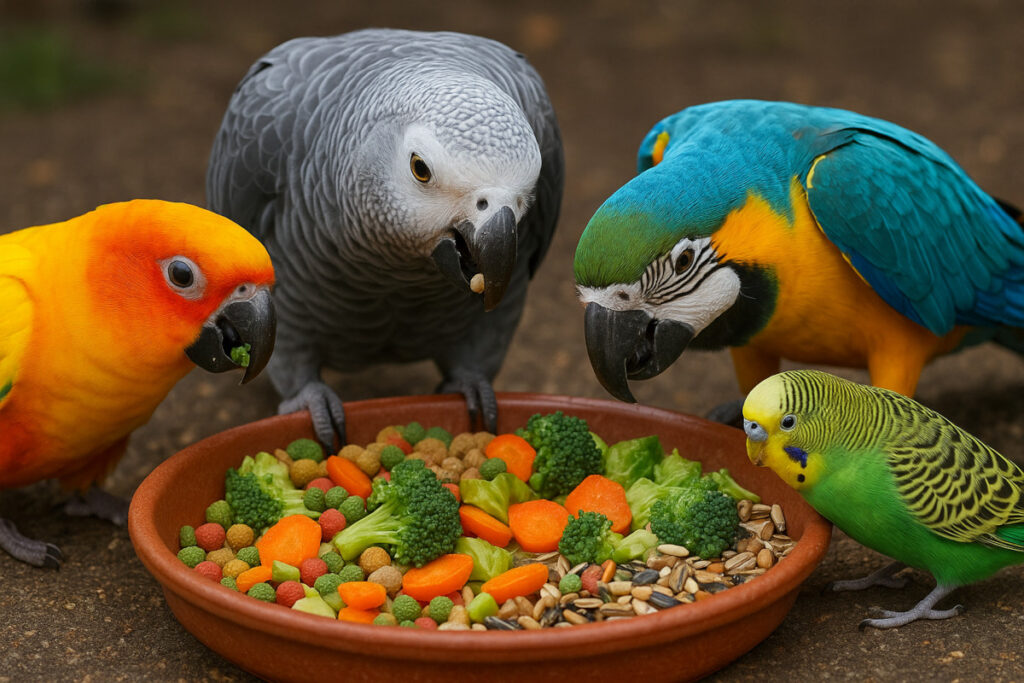
Birds need balanced diets to support feathers, immunity, growth, and long-term health. Poor diets cause obesity, fatty liver disease, weak feathers, low energy, and chronic vitamin deficiencies.
In South Africa, many birds are fed seed mixes with sunflower seed as the primary ingredient. These mixes are cheap and widely available, but they lack key nutrients.
Heatwaves, humidity, and loadshedding affect food freshness, increasing the risk of mould and spoilage. Birds kept indoors during extended outages may also receive fewer fresh foods if refrigeration fails.
Seeds vs Pellets: The Key Differences
Seed diets
Most seed mixes contain:
- Sunflower seed
- Millet
- Canary seed
- Oats
Seeds are high in fat and low in many essential nutrients. Birds often pick out their favourite seeds, resulting in severe imbalances.
Pellet diets
Pellets are formulated to contain:
- Vitamins
- Minerals
- Amino acids
- Balanced energy
- Consistent nutrients in every bite
Pellets prevent selective feeding and support long-term health.
Which birds benefit most from pellets?
- Parrots (African Greys, Cockatoos, Amazons)
- Conures
- Cockatiels
- Ringnecks
- Lovebirds
Many South African avian vets now recommend 70–80% pellets with 20–30% fresh produce.
Why Seed-Only Diets Are a Problem
Seed-only diets contribute to several common health issues in South Africa:
1. Fatty liver disease
Sunflower seed is high in fat and contributes to liver damage over time.
2. Vitamin deficiencies
Low levels of vitamins A, D3, and E weaken immunity and feather quality.
3. Poor feather health
Birds on seed diets develop:
- Dull feathers
- Slow moulting
- Stress bars
- Feather plucking tendencies
4. Obesity
Especially common in older parrots and cockatiels.
5. Shorter lifespan
Malnutrition reduces overall longevity.
Benefits of Pellet Diets for SA Birds
1. Consistent nutrition
Pellets contain nutrients birds cannot get from seeds alone.
2. Reduced picky eating
Birds cannot select only high-fat foods.
3. Better immunity
Vitamin A and D3 improve resistance to infections.
4. Improved feather health
Pellets support normal moulting and pigmentation.
5. Lower long-term health costs
Birds on balanced diets need fewer vet visits.
How to Transition Birds from Seeds to Pellets
Birds rarely switch diets immediately. Gradual transition improves success.
Step-by-step guide
- Mix 10% pellets with 90% seeds for 5–7 days.
- Increase to 25% pellets for another week.
- Move to 50% pellets for 1–2 weeks.
- Final goal: 70–80% pellets.
Tips
- Offer pellets in the morning when birds are hungriest.
- Avoid mixing pellets with wet food (causes spoilage).
- Remove sunflower seed temporarily during transition.
- Be patient; some birds take weeks to adjust.
Safe South African Produce for Pet Birds
Fresh produce adds moisture, vitamins, and minerals.
Safe vegetables
- Butternut
- Carrots
- Green beans
- Baby marrows
- Sweet potato
- Broccoli
- Spinach (limited amounts)
- Peas
Safe fruits (in small amounts)
- Apples (no seeds)
- Papaya
- Mango
- Blueberries
- Banana
- Pear
- Grapes (limited)
South African birds benefit from seasonal produce due to freshness and affordability.
Unsafe Foods for Birds in South Africa
Avoid feeding:
- Avocado
- Chocolate
- Caffeine
- Onion
- Garlic
- Alcohol
- Processed or salty foods
- Fruit seeds (apple, peach, apricot)
- Unwashed produce with pesticide residue
Never feed mouldy food; mycotoxins are fatal to birds.
How Climate Affects Bird Diets in South Africa
Heatwaves
Birds dehydrate faster and may refuse dry seeds.
Offer:
- Moist vegetables
- Clean water in multiple bowls
- Pellets instead of fatty seeds
High humidity (coastal KZN, Eastern Cape)
Seed mixes grow mould quickly.
Store seeds in airtight containers.
Cold winters (Free State, Highveld)
Birds need extra calories but not extra sunflower seeds.
Use cooked vegetables or warm mash instead.
How Loadshedding Affects Feeding
Loadshedding can disrupt feeding routines.
Key risks
- Refrigerated foods spoil
- Water pumps stop working
- Kitchens become hot, reducing appetite
- Owners feed fewer fresh foods during outages
Solutions
- Keep a backup supply of pellets
- Store fresh vegetables in a cooler box during long outages
- Avoid leaving fruit in cages overnight
- Use battery-powered fans for airflow during extreme heat
Stable routines reduce stress.
Feeding Guidelines for Common South African Pet Birds
African Grey Parrots
- 70% pellets
- 25% vegetables
- 5% fruit
High vitamin A needs; include butternut and carrots.
Cockatiels
- 60% pellets
- 30% vegetables
- 10% seeds (low-fat mix)
Ringnecks
- 70% pellets
- Fresh greens daily
- Limited fruit
Lovebirds
- 70% pellets
- 20% vegetables
- 10% seeds
Budgies
- 50% pellets
- 30% vegetables
- 20% seeds
Species differences matter for long-term health.
Detecting Diet-Related Illness
Watch for signs of poor nutrition:
- Rapid weight gain
- Overgrown beak
- Dull feathers
- Weakness
- Frequent infections
- Excessive moulting
- Feather plucking
These symptoms often improve once the diet is corrected.
How to Choose Quality Pellets in South Africa
Look for:
- No artificial colourants
- High vitamin A content
- Natural ingredients
- Balanced protein
Popular brands in SA
- Harrison’s
- Roudybush
- AviPlus
- Versele-Laga
- Vetafarm
Many are available through local online stores and avian vets.
Conclusion
South African bird owners can significantly improve their birds’ health by replacing seed-heavy diets with balanced pellets and fresh produce.
Climate, humidity, heat, and loadshedding affect food safety, making proper storage and consistent routines essential.
With gradual transition, good-quality pellets, and safe local produce, birds maintain healthy feathers, strong immunity, and long lifespans.